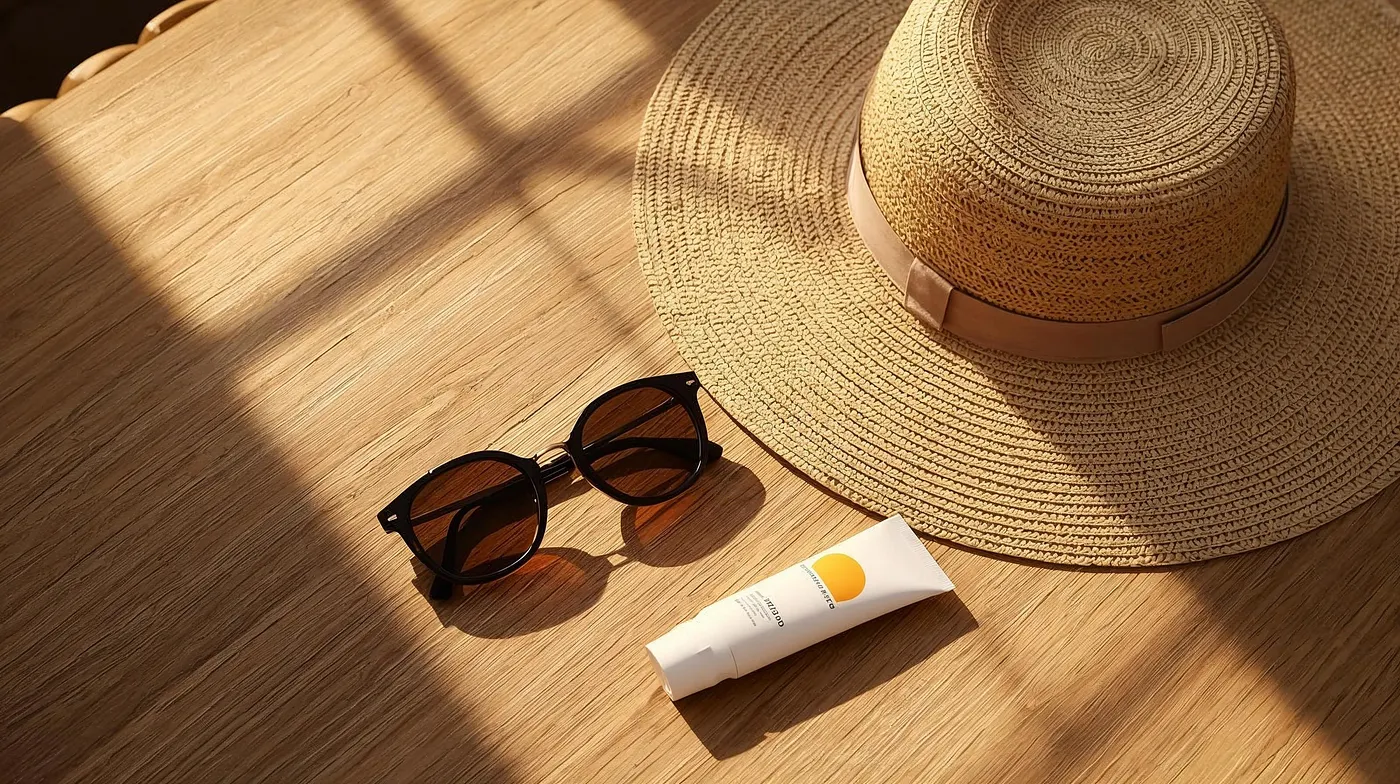
The Sunscreen Debate No One Talks About
Walk into any pharmacy and you’ll see entire aisles filled with sunscreen products promising:
- “Broad-spectrum protection”
- “Anti-aging defense”
- “Dermatologist recommended”
- “Prevents skin cancer”
Yet many people still ask a simple question:
Is sunscreen truly essential… or has the fear of sunlight been exaggerated?
The truth sits somewhere between overexposure and overprotection.
Sunlight is both life-giving and potentially damaging. Understanding the difference is key.
Let’s unpack the science.
First: What Exactly Are UV Rays?
Sunlight contains several types of radiation, but three matter most for skin.
- UVA Rays — The Aging Rays
- UVB Rays — The Burning Rays
- UVC Rays — The Dangerous Rays
Let’s explore them!
1. UVA Rays — The Aging Rays
UVA rays penetrate deep into the dermis, the skin’s structural layer.
They cause:
- Collagen breakdown
- Elastic fiber damage
- Skin sagging
- Hyperpigmentation
- Photoaging
UVA exposure is responsible for up to 80–90% of visible skin aging.
UVA rays are present all day and all year, even on cloudy days.
They also pass through glass, meaning you receive UVA exposure indoors near windows.
2. UVB Rays — The Burning Rays
UVB rays affect the outer skin layer (epidermis).
They cause:
- Sunburn
- DNA damage
- Skin cancer mutations
UVB intensity peaks between 10 AM — 4 PM.
Unlike UVA, UVB does not penetrate glass easily.
3. UVC Rays — The Dangerous Rays
Fortunately, Earth’s atmosphere blocks UVC, so we rarely encounter them naturally.
The Real Science: Does Sunscreen Prevent Skin Cancer?
One of the strongest scientific trials ever conducted on sunscreen was the Australian Nambour Study. Results showed:
Regular sunscreen use reduced:
- Squamous cell carcinoma by ~40%
- Melanoma by ~50%
These findings were later supported by multiple studies published in:
- Journal of Clinical Oncology
- The Lancet
- JAMA Dermatology
The mechanism is simple:
UV radiation damages DNA in skin cells.
If the DNA repair system fails, mutations accumulate.
Over time this can produce cancers such as:
- Basal cell carcinoma
- Squamous cell carcinoma
- Melanoma
Sunscreen works by absorbing, reflecting, or scattering UV radiation before it damages DNA.
The Aging Question: Does Sunscreen Really Prevent Wrinkles?
This is one of the most misunderstood truths in dermatology.
Yes, sunscreen dramatically slows skin aging.
A landmark study in Annals of Internal Medicine found that people who used sunscreen daily had 24% less skin agingthan those who used it occasionally.
UV exposure accelerates a process called photoaging, which includes:
- Collagen breakdown
- Elastin fiber degradation
- Increased oxidative stress
- Pigmentation changes
Dermatologists sometimes summarize it bluntly:
“The sun causes most wrinkles, not age.”
In fact, comparing protected vs exposed skin (like inner arm vs outer arm) clearly shows the difference.
If Sunscreen Is So Good… Why Is There Controversy?
Several debates exist around sunscreen.
Let’s explore them honestly.
Concern #1: Does Sunscreen Block Vitamin D?
Sun exposure triggers Vitamin D production in the skin.
Theoretically, sunscreen could reduce this process.
But research shows:
Real-world sunscreen use rarely reduces Vitamin D levels significantly.
Why?
Most people:
- Apply too little sunscreen
- Miss spots
- Don’t reapply
This allows enough UV exposure for Vitamin D production.
For most people:
10–20 minutes of sunlight on arms or legs is enough.
Diet and supplements also easily correct deficiencies.
Concern #2: Chemical Sunscreen Absorption
Some sunscreen ingredients can enter the bloodstream.
Examples include:
- Oxybenzone
- Avobenzone
- Octinoxate
Studies from the FDA showed these ingredients can be detected in blood after heavy sunscreen use.
However:
There is no evidence these levels cause harm.
But research is ongoing.
Because of this, some dermatologists recommend mineral sunscreens instead.
Concern #3: Environmental Impact
Certain chemical sunscreens may harm coral reefs.
Oxybenzone and octinoxate have been linked to coral bleaching.
This led to bans in places like:
- Hawaii
- Palau
Mineral sunscreens are generally considered reef safer.
Mineral vs Chemical Sunscreen
Understanding this difference helps consumers choose wisely.
Mineral Sunscreens
Active ingredients:
- Zinc oxide
- Titanium dioxide
How they work:
They reflect and scatter UV radiation.
Advantages:
- Less skin irritation
- Reef safe
- Broad spectrum protection
Disadvantages:
- White cast on darker skin
- Thicker texture
Chemical Sunscreens
Common ingredients:
- Avobenzone
- Octinoxate
- Oxybenzone
- Homosalate
How they work:
They absorb UV rays and convert them into heat.
Advantages:
- Lightweight
- Transparent
- Easier to apply
Disadvantages:
- Possible irritation
- Environmental concerns
What SPF Actually Means
SPF stands for Sun Protection Factor.
It measures protection against UVB rays only.
Example:
SPF 30 allows you to stay in the sun 30 times longer before burning.
Protection levels:
- SPF 15 blocks ~93% UVB
- SPF 30 blocks ~97%
- SPF 50 blocks ~98%
No sunscreen blocks 100%.
When Should You Use Sunscreen?
Dermatology guidelines recommend sunscreen when:
- UV index > 3
- Outdoor activity > 20 minutes
- Between 10 AM — 4 PM
High-risk individuals include:
- Fair skin
- Family history of melanoma
- Outdoor workers
- High altitude exposure
- Beach or snow environments
Snow and water reflect UV rays, increasing exposure.
The Right Way to Apply Sunscreen
Most people apply only 25–50% of the recommended amount.
Dermatologists recommend:
- 1 teaspoon for face and neck
- 1 ounce (shot glass) for full body
Apply 15 minutes before sun exposure.
Reapply every:
- 2 hours
- After swimming
- After sweating
The Best Protective Strategy Is Not Just Sunscreen
Dermatologists emphasize multi-layer sun protection.
1. Protective Clothing
UPF-rated clothing blocks UV rays.
Wide-brim hats protect:
- scalp
- ears
- neck
2. Sunglasses
UV exposure contributes to:
- cataracts
- macular degeneration
UV-blocking sunglasses are essential.
3. Shade Timing
The sun’s strongest radiation occurs between:
10 AM — 4 PM
Limiting exposure during this window reduces risk significantly.
The Truth About “Healthy Tanning”
A common myth:
“A tan protects the skin.”
Reality:
A tan is actually a sign of DNA damage.
Melanin increases in response to injury.
Dermatologists often say:
“A tan is your skin trying to survive UV damage.”
What Happens When People Ignore Sunscreen
Long-term sun damage leads to:
- Deep wrinkles
- Pigmentation spots
- Broken blood vessels
- Leather-like skin texture
- Skin cancers
These effects accumulate slowly over decades.
Which is why many people notice severe sun damage after age 50.
So Should Everyone Use Sunscreen?
The scientific consensus among dermatologists is:
Yes, but intelligently.
Healthy sunlight exposure has benefits:
- Vitamin D
- Circadian rhythm regulation
- Mood enhancement
But chronic UV exposure accelerates aging and increases cancer risk.
The goal is balance.
A Dermatologist’s Balanced Recommendation
Use sunscreen when:
- Sun exposure exceeds 20 minutes
- UV index is moderate to high
- Outdoor activities are prolonged
Prefer:
- Broad-spectrum SPF 30+
- Zinc oxide based formulas
- Daily facial sunscreen
And combine with:
- Hats
- Clothing
- Shade
Final Truth: The Real Enemy Is Not Sunlight
The real danger is chronic unprotected exposure.
Humans evolved under sunlight.
But modern life creates a mismatch:
- We live longer
- Skin damage accumulates for decades
- Outdoor exposure often occurs during peak UV hours
Sunscreen is not meant to eliminate sunlight.
It is meant to moderate it.
Used wisely, it protects your skin while allowing you to still benefit from the sun.
The evidence for sunscreen is strong on the things that actually matter: reducing squamous cell carcinoma by ~40%, melanoma by ~50%, and slowing visible skin aging by roughly a quarter in daily users. The vitamin D concern is largely theoretical in real-world use — most people under-apply anyway. The only legitimate questions are about chemical absorption (ongoing research, switch to mineral if it concerns you) and environmental impact (oxybenzone and coral reefs). Daily SPF 30+ mineral sunscreen on the face, plus 10–20 minutes of unprotected sun on the arms or legs for vitamin D, is the practical middle ground.
Disclaimer
The information in this article is provided for educational and informational purposes only and is not intended as medical advice, diagnosis, or treatment. Skin health and sun exposure risks vary widely depending on individual factors such as skin type, genetics, medications, and geographic location. Readers should consult a qualified healthcare professional or board-certified dermatologist before making changes to their skincare routine, sun-exposure habits, or use of sunscreen products. While every effort has been made to present accurate, science-based information, research on UV exposure, skin aging, and sunscreen ingredients continues to evolve, and recommendations may change over time.
What I'd Actually Do
- Use a daily SPF 30+ broad-spectrum sunscreen on your face every morning — this single habit delivers most of the anti-aging and cancer-prevention benefit the research shows.
- Switch to a zinc oxide-based mineral formula. It's reef safer, less skin irritating, and avoids the ongoing uncertainty about chemical sunscreen absorption. The white cast is minimal in newer formulations.
- Get 10–20 minutes of natural sun on arms or legs in the morning (before peak hours), without sunscreen. That's your vitamin D window. Don't skip it in the name of full-body sun protection.
- Apply the right amount: 1 teaspoon for face and neck, 1 shot glass (1 oz) for the full body. Most people apply 25–50% of the effective dose, which means their SPF 30 is performing more like SPF 10.
- Reapply every 2 hours when outdoors, after swimming or sweating. Reapplication is where most people fall short — the initial application isn't the problem.
- Talk to a dermatologist if you have a personal or family history of melanoma, fair skin with high sun exposure, or history of abnormal moles — professional monitoring and individualized recommendations are worth the investment.