I used to train hard on Monday and feel fine by Tuesday. Now I train hard on Monday and Tuesday is a negotiation. Wednesday is the real question. That's not decline — that's a system that requires a different input to produce the same output. The biology shifted. The protocol needs to shift with it.
Over 40, soreness lasts longer, energy takes more time to return, and the margin between productive training and accumulated damage narrows. Ignoring this doesn't make you tougher — it accumulates a debt that eventually forces a break you didn't choose. I've paid that debt twice. I'd rather not again.
Here are the five levers that actually move the needle. Not theory — what I've tested, what the research supports, what works in the real schedule of someone who trains six days a week and runs platform engineering teams.
Why Recovery Slows After 40
Three physiological realities compound on each other after 40.
Inflammation resolution slows. After a hard session, your body triggers acute inflammation — a necessary signal for repair. Younger bodies resolve it faster. After 40, inflammatory markers stay elevated longer, which extends the soreness window and delays the anabolic repair phase.
Hormonal support drops. Testosterone and growth hormone — both critical for muscle protein synthesis and tissue repair — decline with age. This doesn't mean repair stops. It means it takes longer and requires better inputs to execute at the same rate.
Satellite cell activation slows. Satellite cells are the muscle stem cells that repair damaged fibers. Their response time and activation rate decrease with age. Again, not broken — just slower. The window for optimal recovery inputs gets longer, not shorter.
The Debt Model
Think of recovery capacity as a credit line. Every hard session draws from it. Sleep, nutrition, stress management, and active recovery deposit back. When you're young, the deposits happen fast and the line resets quickly. After 40, deposits are slower and the line is smaller.
Most people respond to this by training less. That's one option. The better option is to get obsessively good at the deposit side. That's what these five levers address.
Lever 1: Sleep — Everything Else Is Secondary
This is not negotiable and not interesting to talk about, which is why most people skip it. 80% of growth hormone is released during deep sleep. Muscle protein synthesis peaks during slow-wave sleep. Inflammatory cytokines are regulated during sleep cycles. Cut sleep to six hours and you've essentially written a bad check on every workout you did that week.
What I actually do: 10:30pm in bed, no screens for 30 minutes prior, room at 67°F, blackout shades. I track HRV weekly — it's the clearest signal I have that sleep quality is degrading before I feel it. When HRV drops three days in a row, I reduce training intensity before my body makes that decision for me.
Lever 2: Protein Timing in the Recovery Window
After a hard session, there's a 30-to-90-minute window where muscle protein synthesis is most responsive to amino acid availability. After 40, this window may be slightly less forgiving than it is at 25, but it still exists and it matters.
I eat 40–50g of protein within 60 minutes of finishing a hard session. Not a bar. Not a shake with 15g. Real protein — usually eggs or a ground beef bowl if I'm home, or collagen peptides plus Greek yogurt if I'm traveling. Leucine is the critical trigger. You need at least 2.5–3g of leucine per serving to maximally stimulate MPS. Most "protein snacks" don't clear that bar.
On keto, this is straightforward. High-fat, high-protein meals are already the default. The timing discipline is the variable to optimize.
Lever 3: Active Recovery vs. Doing Nothing
Complete rest is not the optimal recovery protocol. Light movement the day after a hard session increases blood flow, clears metabolic waste, and reduces soreness more effectively than staying on the couch. The key word is light — this is a 20-minute walk, a mobility session, or easy cycling at conversational pace. Not another workout with a different name.
I structure my week with two full training days followed by one active recovery day — not a rest day, an active recovery day. That distinction matters. A rest day is passive. An active recovery day is deliberate. On those days I do 20–30 minutes of zone 2 cardio and 15 minutes of mobility work. I feel better the following training day every time.
Lever 4: Stress Management and Cortisol
Cortisol is catabolic. It breaks tissue down. In the short term that's fine — cortisol spikes during exercise are part of the adaptation signal. Chronically elevated cortisol from work stress, poor sleep, and over-training tells your body to cannibalize muscle rather than build it.
I run platform engineering teams. My cortisol doesn't need help staying elevated. What I've learned to do: treat the last 30 minutes before bed as a decompression protocol, not dead time. No email. No Slack. Brief writing — what went well, what I'm carrying into tomorrow, what I can release. It takes 10 minutes and the sleep quality delta is measurable.
The other thing that helps: not treating every workout as a war. I used to train to exhaustion because I thought that was the point. The point is the adaptation, not the exhaustion. Leaving one or two reps in reserve on most sets keeps the nervous system out of chronic stress and keeps cortisol from compounding.
Lever 5: Cold and Heat — What the Research Actually Supports
Cold water immersion reduces acute soreness and speeds subjective recovery — the evidence here is solid. The debate is whether it blunts long-term adaptation by dampening the inflammatory signal that drives muscle growth. The current research suggests that cold immediately post-strength session may interfere with hypertrophy adaptations. Cold after endurance work or on recovery days doesn't carry the same risk.
My protocol: I don't cold plunge immediately after a strength session. I'll use it 6–8 hours later, or on recovery days, or after conditioning work. Contrast therapy — alternating hot and cold — shows benefit for recovery without the adaptation concern of immediate post-lift cold. A hot shower followed by 60 seconds cold, repeated three times, takes less than 10 minutes.
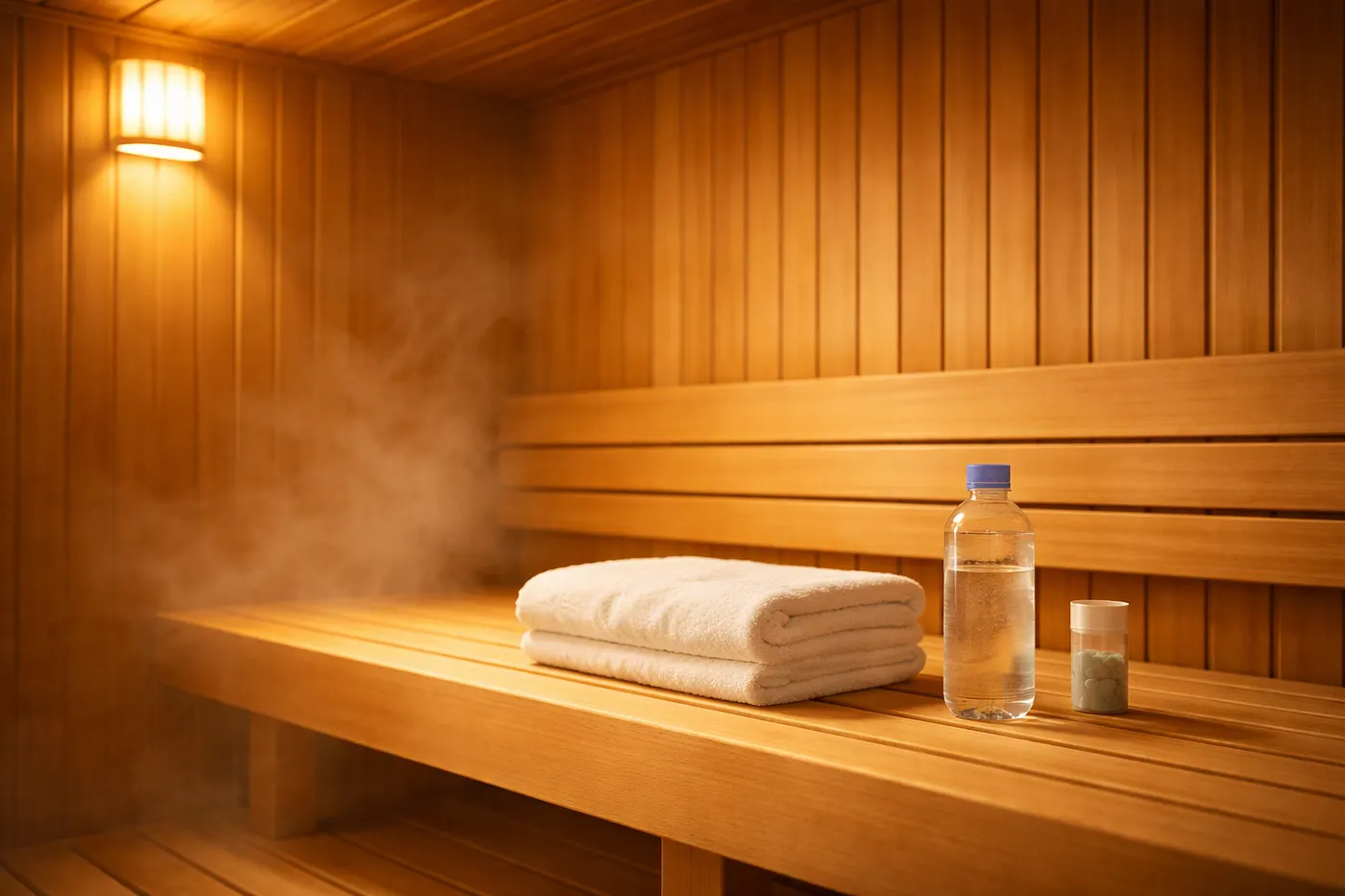
Sauna evidence is strong and separate: regular sauna use (3–4 times per week, 15–20 minutes at 170–190°F) is associated with reduced inflammation, better cardiovascular markers, and improved growth hormone release. I treat sauna as a recovery tool, not a luxury.
My Recovery Stack After Hard Sessions
- 40–50g protein within 60 minutes, leucine-rich
- 3–5g creatine daily (no timing dependency once saturated)
- Magnesium glycinate 400mg before bed — supports sleep and muscle relaxation
- HRV check every morning — three consecutive low days triggers a deload
- Sauna 3x per week, not immediately post-lift
- Active recovery day after every two hard training days
- 10:30pm lights out — non-negotiable
None of this is complicated. What's complicated is accepting that recovery is training. The adaptation doesn't happen during the workout. It happens during the rest. The workout is just the signal. Everything else determines whether your body responds to it.
After 40, the limiting factor isn't your ability to train hard — it's your ability to recover from it. Sleep, protein timing, active recovery, cortisol management, and selective use of cold and heat are the five variables with the most evidence and the most practical leverage. Optimize the recovery side and training stops being the bottleneck.
Not sure whether to train or rest today? Three honest inputs, one clear answer.
Check your recovery →What I'd Actually Do
- Lock in a consistent sleep window before optimizing anything else — it's the highest-leverage variable by a wide margin
- Get 40–50g of protein within 60 minutes after hard sessions — timing is the variable most people miss
- Replace one rest day per week with a deliberate active recovery day — 20 min zone 2 cardio plus 15 min mobility
- Track HRV weekly and use three consecutive low readings as an automatic deload trigger
- Add sauna 3x per week if accessible — 15–20 minutes, not immediately post-lift strength session
- Take recovery as seriously as training — write it into the schedule, not just the workouts