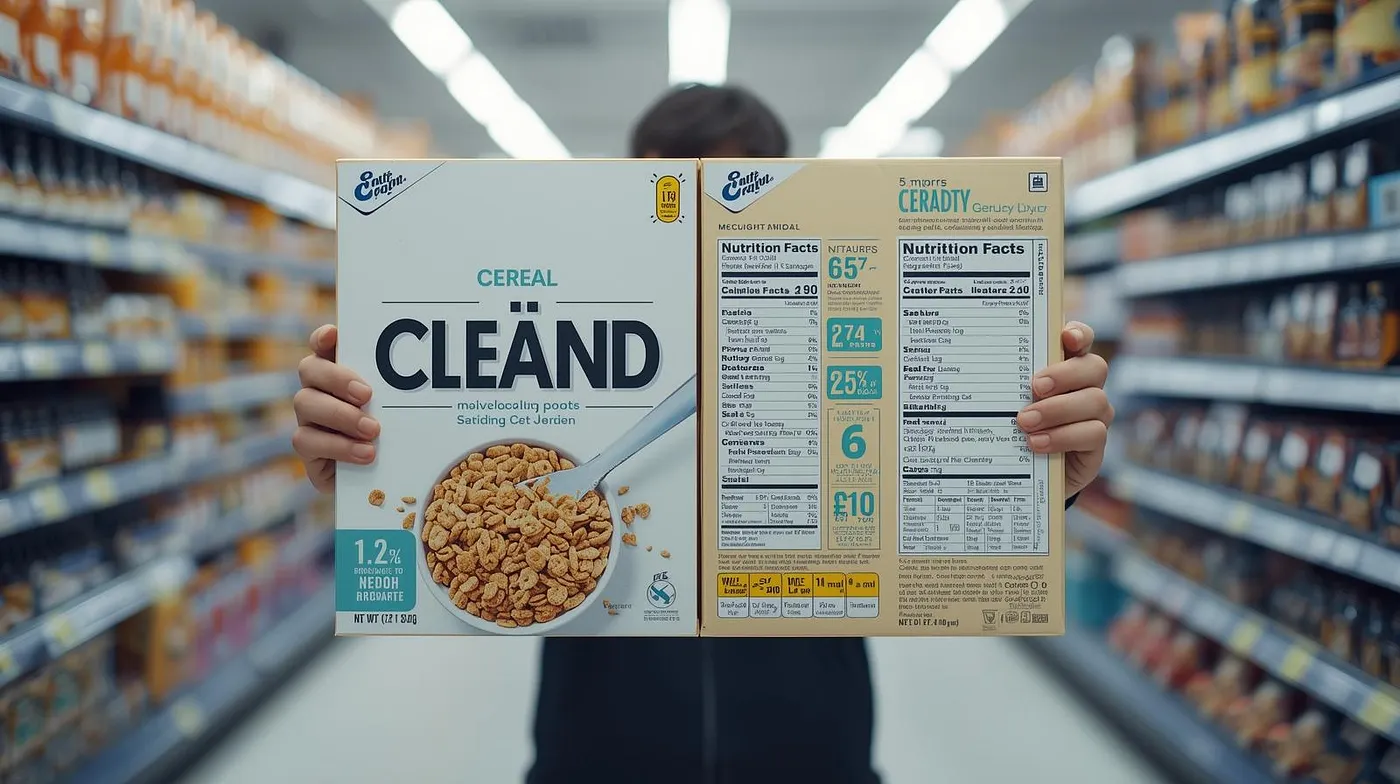
1. Start with the Serving Size — The Hidden Multiplier
All those numbers, calories, fat, sugar, sodium are based on one serving.
If the box says ½ cup of cereal and you pour a full bowl, you’ve tripled everything.
Pro tip: Always multiply the numbers by what you actually eat.
2. Calories — Energy, Not the Enemy
Calories are energy units. What matters is nutrient density — the nutrition you get for the calories you spend.
A 200-calorie avocado snack fuels you.
A 200-calorie soda drains you.
Ask: Is this fuel or fluff?
3. Fats, Carbs, and Protein — The Big Three
Fat
- Good: Olive oil, avocado, nuts, seeds, fish
- Avoid: “Hydrogenated,” “partially hydrogenated,” “vegetable shortening”
- Caution: Palm oil and refined seed oils, common even in “keto” snacks are inflammatory.
Keto note: Keto-friendly doesn’t mean clean. Some keto snacks hit macros on paper but fail on quality fats.
Carbs
- Fiber ≥3 g per serving = great
- Avoid sugars (anything ending in -ose or “syrup”)
- Watch “net carb” math in keto bars — it’s often creative accounting
Protein
Look for at least 10 g in snacks, 15–20 g in meals. It helps satiety and blood sugar balance.
4. Sodium — The Quiet Culprit
Hidden sodium lives in bread, sauces, soups, and “healthy” frozen meals.
More than 400 mg per serving is high.
Even if it doesn’t taste salty, your bloodstream knows.
5. Sugar — The Sweet Deception
“No Sugar Added” can still mean sweetened with fruit concentrates or syrups.
If sugar appears in the first 3 ingredients, it’s dessert, not dinner.
In keto foods, check for maltitol or sucralose, both can spike insulin.
“The healthiest food doesn’t need a health claim.”
6. Ingredients — The Real Truth Teller
Ingredients appear by weight. The first few dominate the recipe.
Rolled oats, almonds, honey → real food
Corn syrup, palm oil, artificial flavor → ultra-processed
Red Flags:
Hydrogenated oils • MSG • BHA/BHT • Artificial colors • “Natural flavor” catch-alls • Sugar alcohols (-ol) • Maltodextrin
7. How Processed Is It? (NOVA Scale*)
Goal: 80–90 % of your diet from Levels 1–3.
*The NOVA classification system categorizes foods based on the extent and purpose of their processing. It divides foods into the above four groups.
8. Where It’s Made, and Why It Matters
Look near the barcode: “Made in the USA,” “Product of Canada,” or “Manufactured for…”
Different countries follow different safety rules.
- EU bans several dyes and preservatives the U.S. still allows.
- Vague “packaged for” phrasing? Research the source. Transparency matters.
9. USDA Organic, Non-GMO, and “Natural”
- USDA Organic: Certified farms, limited pesticides and GMOs.
- Non-GMO Verified: No engineered ingredients but not pesticide-free.
- “Natural”: Completely unregulated. Anyone can print it.
Best combo: USDA Organic + short ingredient list + minimal processing.
10. “Keto-Friendly” and Other Health-Halo Labels
“Keto-friendly” isn’t regulated. “Keto Certified” seals are private logos.
Before buying:
- Check fat source (avoid refined seed oils).
- Confirm sweeteners (erythritol, monk fruit, allulose > maltitol).
- Ensure net-carb math is honest.
- Watch fiber sources (some spike glucose).
If a label screams “KETO!” louder than it lists ingredients, that’s your cue to walk away.
11. Expiry Dates; More Than Just Numbers
- Best By: Peak quality — safe after but may lose flavor.
- Use By: Safety date — respect it.
- Sell By: For stores, not you.
Always check storage instructions (“Refrigerate after opening”) and trust your senses over stamps.
12. % Daily Value — Your Quick Reality Check
- ≤ 5 % DV: Low
- ≥ 20 % DV: High
High = good for vitamins, minerals, fiber.
Low = good for sodium, added sugar, saturated fat.
13. My Personal “Shelf-Check” Routine
Before a product hits my cart, I ask:
- Are the first three ingredients real?
- Any hydrogenated oils or fake sweeteners?
- Does it deliver fiber or protein?
- Is sodium or sugar reasonable?
- Do I trust where it’s made?
If it passes 4 of 5, it earns a ride home.
14. The “Keto” Snack Bar Test
If your “health food” could survive a zombie apocalypse, it’s not health food.
Final Thought
Food labels are not just data; they’re stories of origin and intention.
They reveal whether your meal was made for wellness or shelf life.
When you read labels like a detective, grocery shopping becomes a self-care ritual because the healthiest food doesn’t need to shout; it simply is.
If this resonated, explore the other dimension of Eat · Train · Lead
Interested in taking your nutrition awareness a step further? My guide on — Keto for Beginners — A Human Journey to Metabolic Freedom dives into how ketosis works, what to eat, what to avoid, and how to transition safely, especially for people new to low-carb living.
The information in this article is for educational and informational purposes only. It reflects general nutrition principles and personal experience, and is not intended to diagnose, treat, or replace advice from a qualified healthcare professional. Always consult your doctor, registered dietitian, or qualified healthcare provider before making significant dietary or lifestyle changes, especially if you have any medical conditions, allergies, or are taking medications.
About the Author
Raj Chanolian is a health enthusiast and nutrition researcher passionate about helping people make smarter food choices through awareness and self-education. He writes about real-world nutrition, fitness, and mindful living.
Food label literacy is one of the highest-leverage skills you can build for long-term health — and it takes about 30 minutes to learn the basics. The supplement industry's self-labeling and the FDA's hands-off approach to "natural" claims mean you genuinely cannot trust packaging claims at face value. The five-question shelf check in this article is a practical filter that works for 90% of decisions without requiring a nutrition degree.
Turn this into daily targets — protein first, fat fills the rest, no carb math.
Calculate your macros →What I'd Actually Do
- Learn the five-question shelf check by heart: real first ingredients, no hydrogenated oils, delivers fiber or protein, reasonable sodium/sugar, trust the origin
- Always check the serving size first — this single step prevents more label misreads than any other habit
- Ignore the front of the package entirely; all meaningful information is in the nutrition facts panel and the ingredient list on the back
- When buying anything marketed as keto-friendly, verify the sweetener (erythritol and monk fruit are fine; maltitol is not) and the fat source (avoid refined seed oils)
- For packaged snacks, aim for an ingredient list you could explain to a 10-year-old; if you cannot, the product probably does not belong in your cart
- Talk to a clinician if you have allergies, food sensitivities, kidney disease, or are managing blood sugar with medication before making significant dietary changes based on this guidance.