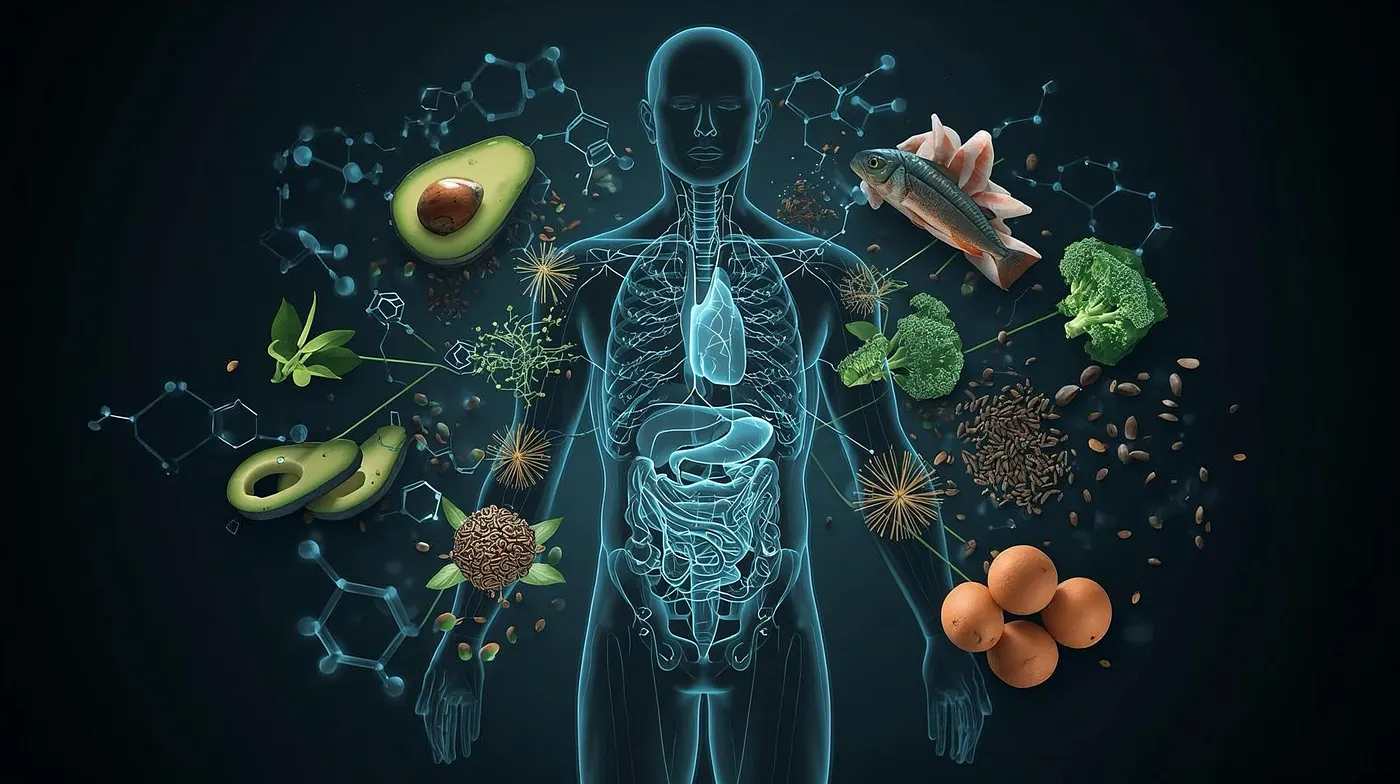
The Fat You Can’t See Is the Fat That’s Killing You
Visceral fat is not just extra weight.
It is metabolically active tissue, a biological factory that continuously releases inflammatory signals into your bloodstream.
Unlike subcutaneous fat (the fat you can pinch), visceral fat wraps around vital organs like the liver, pancreas, and intestines.
This deep fat depot is strongly associated with:
- Insulin resistance
- Fatty liver disease
- Chronic inflammation
- Cardiovascular risk
- Cognitive decline
- Hormonal dysregulation
Yet most people approach it with one blunt tool:
Eat less. Move more.
Here’s the uncomfortable truth:
When your body is inflamed or chronically stressed, calorie restriction alone can make visceral fat harder to lose.
This is not a willpower problem.
It is a biological signaling problem.
To eliminate visceral fat, you must stop treating metabolism like a math equation, and start treating it like a biochemical system.
Why Starvation Backfires Against Visceral Fat
When you aggressively restrict calories, your body interprets it as a survival threat.
This triggers:
- Elevated cortisol (stress hormone)
- Reduced thyroid output
- Lower metabolic rate
- Increased hunger hormones
- Fat storage preservation
Visceral fat is particularly sensitive to stress signals.
In other words:
The more stressed your system becomes, the more your body protects its deepest fat reserves.
This explains why many disciplined individuals:
- Eat less
- Train harder
- Lose weight initially
- Then plateau or rebound
The missing piece is metabolic signaling.
The Visceral Fat Elimination Protocol
5 Functional Foods That Reprogram Fat Storage
These are not “fat burners.”
They are biological messengers that shift your metabolic environment.
1. Omega-3 Fatty Acids — Activating Adiponectin, the “Skinny Hormone”
Adiponectin is a hormone secreted by fat cells that improves:
- Insulin sensitivity
- Fat oxidation
- Inflammation control
- Mitochondrial function
Higher adiponectin levels are strongly associated with:
- Lower visceral fat
- Better metabolic health
- Reduced cardiovascular risk
Omega-3 fatty acids (from fatty fish or supplementation) have been shown to significantly increase circulating adiponectin levels.
Mechanism:
- Reduces inflammatory cytokines
- Improves lipid signaling
- Enhances metabolic flexibility
This shifts the body from fat storage mode → fat utilization mode.
2. Sulforaphane — Unclogging the Liver’s Detox Pathways
The liver is central to visceral fat metabolism.
When liver detoxification pathways are impaired, fat export slows, leading to fatty liver accumulation.
Sulforaphane, a compound abundant in broccoli sprouts, activates the Nrf2 pathway, which:
- Enhances antioxidant defenses
- Improves liver enzyme function
- Supports fat oxidation
- Reduces oxidative stress
Clinical studies show sulforaphane improves hepatic markers in humans.
Think of it as:
A biochemical reset switch for your metabolic engine.
3. Magnesium — Turning Down the Stress Response
Chronic stress drives visceral fat accumulation via:
- HPA-axis activation
- Cortisol elevation
- Poor sleep quality
- Insulin dysregulation
Magnesium plays a crucial role in:
- GABA neurotransmission
- Nervous system regulation
- Sleep architecture
- Blood glucose stability
Adequate magnesium intake helps shift the body from:
Fight-or-flight → Rest-and-repair
This is essential for visceral fat reduction.
4. Viscous Fiber — Engineering Satiety Through Gut Biology
Not all fiber works the same.
Viscous fibers (like psyllium, oats, chia, flax) form a gel-like barrier in the gut, which:
- Slows glucose absorption
- Reduces insulin spikes
- Increases satiety signals
- Feeds beneficial gut bacteria
These bacteria produce short-chain fatty acids (SCFAs), which:
- Improve insulin sensitivity
- Reduce inflammation
- Support fat oxidation
This transforms appetite control from:
Psychological struggle → Physiological regulation
5. Avocado’s Oleic Acid — Mimicking the Effects of Fasting
Avocados contain high levels of oleic acid, which triggers production of Oleoylethanolamide (OEA).
OEA is a lipid messenger that:
- Signals fullness to the brain
- Reduces meal frequency
- Enhances fat oxidation
- Mimics fasting-like metabolic signals
Landmark research shows OEA directly links fat intake to satiety regulation.
In practical terms:
Certain fats can simulate fasting chemistry without starvation.
Stop Counting Calories. Start Engineering Chemistry.
Fat loss is not simply about:
- Eating less
- Exercising more
- Grinding harder
It is about:
- Reducing inflammation
- Supporting liver function
- Regulating stress hormones
- Optimizing metabolic signaling
- Improving mitochondrial efficiency
When biology is aligned, fat loss becomes a consequence — not a battle.
When biology is aligned, fat loss becomes a consequence — not a battle.
Visceral fat disappears when the body no longer needs it as a survival buffer.
The Real Transformation Framework
The future of fat loss is not diet culture.
It is metabolic intelligence.
Instead of asking:
“How many calories should I eat?”
Ask:
“What biochemical signals am I sending my body today?”
That shift alone can change your metabolic destiny.
Visceral fat is the one kind of fat that will quietly outlast your willpower if you fight it the wrong way. Aggressive calorie restriction raises cortisol, which signals the body to protect deep fat stores — exactly the opposite of what you want. The five functional foods here aren't magic, but they do address the biological roots of the problem: inflammation, liver function, stress response, insulin signaling, and satiety regulation. Add them consistently while fixing the basics — sleep, movement, stress — and you're working with your biology instead of against it.
Disclaimer
This article is for educational and informational purposes only and does not constitute medical advice. Nutritional and metabolic interventions may affect individuals differently. Consult a qualified healthcare professional before making significant dietary, supplementation, or lifestyle changes, especially if you have existing medical conditions or are on medication.
See how this fits into a simple, evidence-based daily stack.
See the ingredient stack →What I'd Actually Do
- Add fatty fish (salmon, sardines, mackerel) 3x per week or take a quality omega-3 supplement with at least 2g EPA+DHA daily. This is the single highest-leverage intervention for adiponectin and inflammation.
- Eat broccoli sprouts or take a sulforaphane supplement — the Nrf2 pathway activation is real and the liver benefits compound over weeks, not days.
- Take magnesium glycinate 300–400mg before bed. If visceral fat is stress-driven (and in most 40+ professionals it is), this is essential groundwork, not optional.
- Add a tablespoon of psyllium husk to water or food daily. It takes 3 minutes and the insulin and satiety signal impact is measurable.
- Eat half an avocado with your largest meal. The oleic acid and OEA satiety mechanism is one of the most practical fat-loss tools nobody actually uses.
- Talk to a clinician if you have fatty liver disease, metabolic syndrome, or insulin resistance before making significant dietary changes — supplement dosing and food timing may need to be individualized.