There’s a subtle shift that happens as we age.
Not dramatic. Not sudden. But unmistakable.
Muscle doesn’t respond the way it used to.
Recovery slows. Strength gains require more intention.
And protein, once easy to get from anywhere, suddenly needs to work smarter, not just harder.
That’s where pumpkin seeds quietly enter the picture.
Not as a trend.
Not as a superfood headline.
But as one of the most age-intelligent protein sources you can add to your daily routine.
Why Protein Needs Change With Age
After the age of ~35–40, the body becomes less efficient at something called muscle protein synthesis, the process by which protein turns into actual muscle tissue.
This means:
- You need more leucine-rich, bioavailable protein
- You need minerals that support muscle signaling
- You need anti-inflammatory nutrients to reduce breakdown
- You need protein that’s easy to digest, not heavy or insulin-spiking
Pumpkin seeds check every one of those boxes.
What Makes Pumpkin Seeds Different From Other Plant Proteins
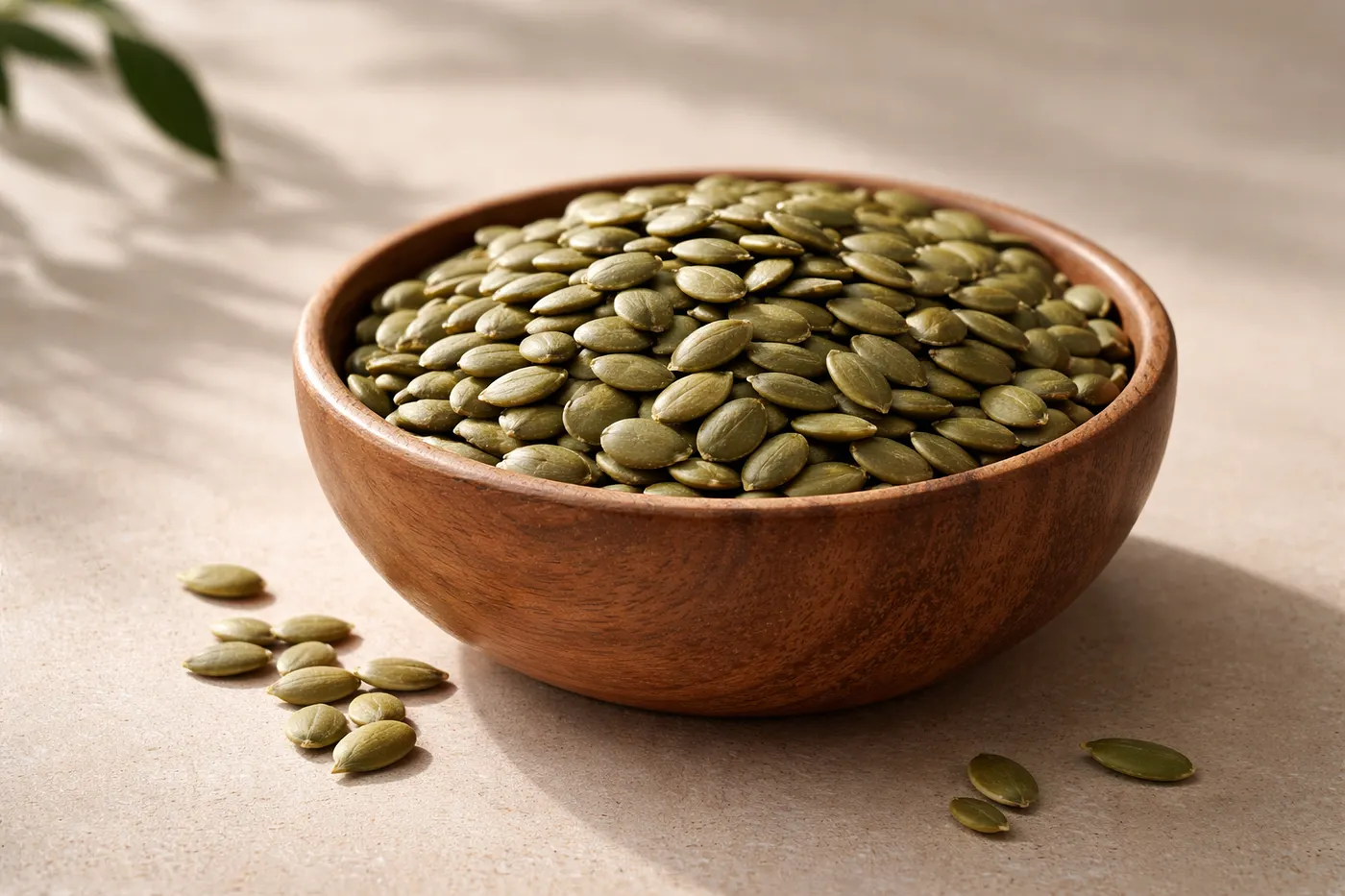
Pumpkin seeds (also called pepitas) aren’t just “plant protein.”
They’re a mineral-dense, hormone-supportive, muscle-protective seed.
Protein Density (Without the Bloat)
- ~9 grams of protein per 30g (1 oz)
- Contains all essential amino acids
- Particularly rich in leucine, isoleucine, and valine (BCAAs)
For aging muscles, this matters.
BCAAs are the on-switch for muscle repair.
The Real Secret: Minerals That Activate Muscle Growth
Protein alone doesn’t build muscle.
Minerals tell protein what to do.
Pumpkin seeds are loaded with the exact minerals that decline with age:
1. Magnesium: The Muscle Signal Amplifier
- Required for muscle contraction & relaxation
- Improves strength output
- Reduces cramps and nighttime muscle tightness
- Supports testosterone regulation (in men and women)
Low magnesium = protein wasted.
Minerals tell protein what to do. Without the right ones, even a clean high-protein diet is leaving muscle on the table.
Pumpkin seeds are one of the richest natural magnesium sources available.
2. Zinc: The Repair & Hormone Mineral
- Essential for muscle recovery
- Supports immune resilience (critical as we age)
- Plays a role in testosterone and growth hormone signaling
- Aids protein synthesis at the cellular level
Zinc deficiency is common after 40 — especially in people who train regularly.
3. Iron: Oxygen for Working Muscles
- Helps transport oxygen to muscle tissue
- Reduces fatigue during workouts
- Supports mitochondrial energy production
Unlike many plant sources, pumpkin seeds contain highly usable non-heme iron, especially when soaked or sprouted.
Healthy Fats That Protect Muscle (Not Add Fat)
Pumpkin seeds contain:
- Omega-6 (balanced, not excessive)
- Monounsaturated fats
- Phytosterols
These fats -
- Reduce muscle inflammation
- Improve insulin sensitivity
- Support joint health
- Prevent muscle breakdown during calorie deficits
This makes pumpkin seeds especially useful during fat loss phases after 40.
Why Pumpkin Seeds Work Better with Age
Let’s connect the dots.
As we age:
- Digestive enzymes decline
- Inflammation increases
- Insulin sensitivity drops
- Hormonal signals weaken
Pumpkin seeds help counter all four.
They are:
- Easy to digest (especially soaked or ground)
- Anti-inflammatory
- Blood sugar stabilizing
- Hormone-supportive
This is why they’re not just protein; they’re protein that still works.
How to Eat Pumpkin Seeds for Maximum Benefit
Best Forms (Ranked)
- Soaked or sprouted seeds — best absorption
- Lightly dry-roasted (low heat) — convenient
- Ground pumpkin seed powder — easiest on digestion
- Cold-pressed pumpkin seed butter — great for calories
Ideal Timing
- Post-workout (paired with carbs)
- Mid-afternoon (prevents muscle breakdown)
- Before bed (magnesium supports sleep + recovery)
Ideal Daily Quantity
For most adults over 35:
- 1–2 tablespoons → maintenance & recovery
- ¼ cup (30g) → active training days
- Up to 40g → muscle gain phases
More is not better.
Consistency is.
How to Pair Pumpkin Seeds for Muscle Growth
Pumpkin seeds shine when combined with:
- Greek yogurt or curd (protein synergy)
- Cottage cheese
- Lentils or dals
- Smoothies with banana or berries
- Oats or overnight oats
This improves:
- Amino acid utilization
- Insulin response
- Mineral absorption
Nutritional Snapshot (Per ~30g)
- Protein: ~9g
- Magnesium: ~150 mg
- Zinc: ~2.2 mg
- Iron: ~2.5 mg
- Healthy fats: ~13g
- Fiber: ~2g
That’s not a snack.
That’s structural nutrition.
Side Effects & Who Should Be Careful
Pumpkin seeds are safe for most people, but:
- Overconsumption may cause bloating
- High fiber can slow digestion if eaten dry
- People with kidney issues should monitor mineral intake
- Always soak if digestion is sensitive
If you’re on mineral supplements, adjust dosage accordingly.
Why This Matters More Than Ever
After a certain age, muscle isn’t about aesthetics.
It’s about:
- Longevity
- Insulin control
- Bone density
- Fall prevention
- Independence
Pumpkin seeds support muscle quality, not just size.
They don’t scream for attention.
They quietly do the work, day after day.
Eat · Train · Lead — Takeaway
- Eat foods that do more than provide calories, choose nutrients that send the right signals.
- Train to keep muscle responsive, not just active.
- Lead your health the same way you lead life: with intention, consistency, and long-term thinking.
Pumpkin seeds are genuinely useful after 40 — not because of any single nutrient, but because they stack protein, magnesium, zinc, and healthy fats in one small package. The protein content (~9g per 30g) is real, the mineral density is real, and the anti-inflammatory fats support recovery. They’re not a replacement for animal protein or targeted supplements when you have a confirmed deficiency. But as a daily food habit for aging muscles, they earn their place in ways most snacks don’t come close to.
Pumpkin seeds aren’t just protein; they’re a quiet strategy for strength that lasts.
They are a protein amplifier.
For people over 35–40, that distinction changes everything.
Add them slowly.
Use them consistently.
Let them support the muscle you want to keep for life.
Disclaimer
This article is for educational purposes and does not replace personalized medical or nutritional advice.
Turn this into daily targets — protein first, fat fills the rest, no carb math.
Calculate your macros →What I'd Actually Do
- Add 30g (roughly a small handful) of raw or lightly roasted pumpkin seeds to your daily routine — post-workout or before bed are both solid windows.
- Soak them overnight if digestion is sensitive. It significantly improves mineral absorption and reduces bloating.
- Pair them with Greek yogurt or cottage cheese post-workout — you get a complete amino acid profile and better insulin response.
- Use ground pumpkin seed powder in smoothies if you train hard — easier on the gut, faster to absorb.
- If you're already supplementing magnesium or zinc, factor pumpkin seeds into your total mineral intake to avoid overshooting.
- Talk to a clinician if you have kidney issues or are managing mineral-sensitive conditions — the zinc and iron in pumpkin seeds add up.