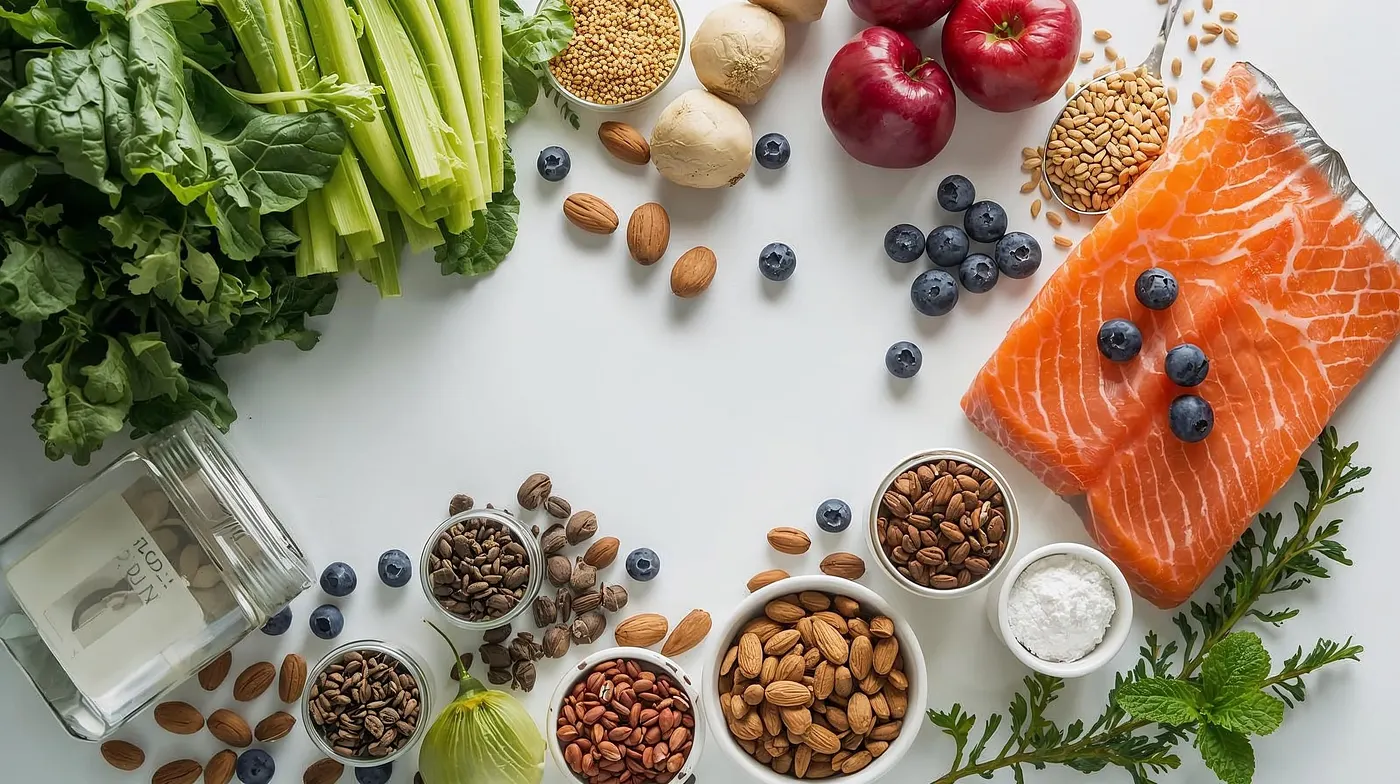
Nutrient Insurance: Why Today’s Diet Is Failing Us
Even if you eat decently, the truth is this:
Most men and women today do NOT meet their daily vitamin and mineral requirements.
It’s not your fault. Modern life is a perfect storm of nutrient depletion:
- Food grown in soil that has 30–50% fewer minerals than decades ago
- Busy schedules → skipped meals or fast-food solutions
- Ultra-processed options that fill your stomach but starve your cells
- Stress, caffeine, alcohol → drain core micronutrients
- Indoor lifestyle → chronically low Vitamin D
- Selective eating → inadequate Omega-3, magnesium, and iron
- Diet trends that remove entire food groups
So even with the best intentions, many of us walk around undernourished, not starving, but sub-optimally fueled.
Energy is lower than it should be.
Sleep is inconsistent.
Workout recovery is slow.
Mood swings happen.
Skin doesn’t glow like it used to.
And yet, the fix is simple:
Nutrient insurance
A consistent combination of real food + smart supplementation.
This is the guide I wish every busy adult had.
Even with the best intentions, many of us walk around undernourished — not starving, but sub-optimally fueled.
The Most Common Nutrient Gaps (+ How to Fix Them)
Here are the nutrients most people fall short on, and the foods that help fill the gap.
1. Vitamin D3 (with K2)
Why you need it: immunity, hormones, mood, bones
Why you’re low: you work indoors
Eat more of: salmon, sardines, eggs
But realistically?
70%+ of adults still need a supplement.
Supplement target: 1000–5000 IU/day D3 + MK-7 K2
2. Magnesium
Why: sleep, recovery, muscles, stress
Eat more: spinach, pumpkin seeds, almonds
But: stress and caffeine drain it.
Supplement target: 200–400 mg/day (glycinate is best)
3. Omega-3 (EPA & DHA)
Why: brain function, inflammation, heart health
Eat more: salmon, sardines, mackerel
Reality: most don’t hit 2–3 servings/week
Supplement: 1000–2000 mg/day EPA+DHA
4. Vitamin B12
Why: energy, nerves, DNA
Eat more: eggs, dairy, beef
Risk: vegetarians, adults over 40, low-stomach-acid users
Supplement: 500–1000 mcg/day methylcobalamin
5. Iron (especially for women)
Why: red blood cells, oxygen transport
Eat more: red meat, lentils, spinach
Who needs a supplement:
- Women with heavy cycles
- Vegetarians
- Anyone with confirmed deficiency
Dose: 18–27 mg/day (women)
Men: avoid unless prescribed.
6. Zinc
Why: immunity, hormone balance, skin
Eat more: red meat, pumpkin seeds
Dose: 8–15 mg/day
7. Calcium
Why: bones, muscles, nerve conduction
Eat more: yogurt, cheese, fortified milks
Supplement only if diet is low: 600–800 mg/day
8. Folate (for women)
Why: cellular repair, pregnancy health
Eat more: leafy greens, avocado, lentils
Supplement: 400–800 mcg methylated folate
9. Probiotics
Why: digestion, immunity, gut health
Eat more: yogurt, kimchi, kefir
Supplement: 10–30 billion CFUs/day
10. Protein
Why: muscle, metabolism, recovery
Eat more: chicken, fish, tofu, eggs
Supplement: whey isolate or plant blend
Target: 0.7–1g per lb of goal body weight
So What Should Men & Women Actually Take Daily?
If you want the simplest, most universal daily routine:
☑ Vitamin D3 + K2
☑ Magnesium Glycinate
☑ Omega-3 (Fish or Krill Oil)
☑ High-quality Multivitamin (men’s or women’s formula)
☑ Protein (whey or plant)
This tiny list covers 95% of modern deficiencies.
What Foods Should You Eat Daily to Hit the Basics?
Think of this as your Daily Food Blueprint, the minimum baseline for nutrient insurance through food.
1–2 cups leafy greens
Spinach, kale, arugula → magnesium, folate, vitamins
1 cup colorful vegetables
Bell peppers, tomatoes, carrots
1–2 servings of fruit
Blueberries, apples, oranges
1 lean protein source each meal
Eggs, chicken, fish, tofu, lentils
1 handful nuts/seeds
Almonds, walnuts, pumpkin seeds → magnesium & zinc
1 fermented food
Yogurt, kefir, kimchi → probiotics
2–3 L of water + electrolytes if active
Hydration supports nutrient absorption.
Fatty fish 2x a week
Omega-3 + Vitamin D
This is the nutritional foundation I recommend under the Eat · Train · Lead lifestyle.
You cannot lead effectively from a depleted body.
You can't supplement your way out of a bad diet, but you can fill real gaps that even a decent diet leaves open in modern life. The five daily essentials — D3+K2, magnesium glycinate, omega-3, a quality multivitamin, and adequate protein — address the deficiencies most commonly found in active adults. Don't buy 20 supplements based on a checklist. Start with these five consistently for 60 days and notice what changes.
Important FDA / Safety Notes
- Supplements fill gaps. They don’t replace a real-food diet
- FDA does NOT regulate supplements strictly → choose reputable brands
- Look for: USP, NSF, or Informed Choice certifications
- Always consult a doctor if you have chronic conditions, are pregnant, or take medications
Eat · Train · Lead Takeaways (Practical + Actionable)
EAT: Fuel for resilience
Focus on simple nutrient-dense foods daily.
When life gets busy, lean on supplements as your safety net.
TRAIN: Move with a supported body
Magnesium, Omega-3, and protein strengthen recovery and performance.
LEAD: Show up at your best
Energy, mood stability, mental clarity, and calm all come from micronutrient sufficiency. You cannot lead effectively from a depleted body.
Appendix A: Complete Men’s Daily Supplement Stack
(Clinically aligned, FDA-guided, real-world practical)
Daily Essentials
- Multivitamin for Men (no iron)
- Vitamin D3 (1000–5000 IU) + K2 (MK-7)
- Magnesium Glycinate (200–400 mg)
- Omega-3 (EPA + DHA, 1000–2000 mg)
Optional Add-Ons
- Zinc (11–15 mg/day)
- Ashwagandha (for stress/cortisol)
- Creatine Monohydrate (3–5 g/day for strength & brain)
- Whey Protein or Plant Blend
- Probiotic (10–30 billion CFU)
Appendix B: Complete Women’s Daily Supplement Stack
Daily Essentials
- Women’s Multivitamin (with iron if menstruating)
- Vitamin D3 (1000–5000 IU) + K2
- Magnesium Glycinate (200–400 mg)
- Omega-3 (1000–2000 mg)
- Folate (400–800 mcg for reproductive age)
Optional Add-Ons
- Iron (only if deficient or heavy periods)
- Collagen (skin, joint support)
- Ashwagandha (stress/cycle regulation)
- Probiotic (10–30 billion CFU)
- Protein supplement (if diet is low)
Appendix C: Daily Food Blueprint Checklist
Morning
- Hydrate (500–700 ml water)
- Protein at breakfast (20–30 g)
- 1 serving fruit
- Supplements: multivitamin + D3/K2 + Omega-3
Afternoon
- 1–2 cups vegetables
- Lean protein source
- Nuts/seeds (handful)
Evening
- Leafy greens
- Lean protein
- Optional probiotic food
- Magnesium (for sleep)
Weekly
- Fatty fish 2–3 times
- Fermented food 3–5 times
- Monitor hydration daily
- Check protein intake
This checklist alone upgrades most diets.
See how this fits into a simple, evidence-based daily stack.
See the ingredient stack →What I'd Actually Do
- Start with the five essentials only: D3+K2 (morning with food), magnesium glycinate (evening), omega-3 (with largest meal), a quality multivitamin, and protein at target intake. That's it for the first 60 days.
- Buy only brands with USP, NSF, or Informed Choice certification. The supplement industry is poorly regulated — third-party testing matters.
- Get bloodwork before starting and again at 90 days. Vitamin D, B12, iron (women), and a basic metabolic panel give you actual data instead of guesswork.
- Add fatty fish 2x per week before buying omega-3 pills. Sardines, mackerel, and salmon are cheap and provide omega-3 with cofactors you don't get from capsules.
- Don't add optional supplements (creatine, ashwagandha, collagen) until the five essentials are consistent for at least 60 days. Layering too fast makes it impossible to know what's working.
- Talk to a clinician if you are pregnant, breastfeeding, managing a chronic condition, or taking prescription medications before starting any new supplement regimen.
Disclaimer
This article is intended for informational and educational purposes only and does not constitute medical advice, diagnosis, or treatment. Nutritional needs vary by individual based on age, health conditions, medications, lifestyle, and other factors. Always consult a licensed healthcare professional or registered dietitian before starting any new supplement, adjusting your diet, or making changes to your health routine, especially if you are pregnant, breastfeeding, managing a medical condition, or taking prescription medications. Statements in this article are based on current scientific understanding but may evolve as new research emerges. Use supplements responsibly and purchase only from reputable, third-party–tested brands.
About the Author
Raj Chanolian is a fitness-forward platform engineering leader, certified personal trainer, and founder of the Eat · Train · Lead philosophy, a lifestyle framework designed to help people fuel better, move better, and lead better. Raj blends science-backed habits with real-life practicality, inspiring readers to optimize health while balancing intense professional demands.