I didn't expect rice to solve a metabolic puzzle.
For years, I treated white rice as neutral, not bad, not magical. Just a staple. But like many people experimenting with body composition, insulin control, and waistline management, I noticed something:
Cooked white rice left me hungry again in 90 minutes.
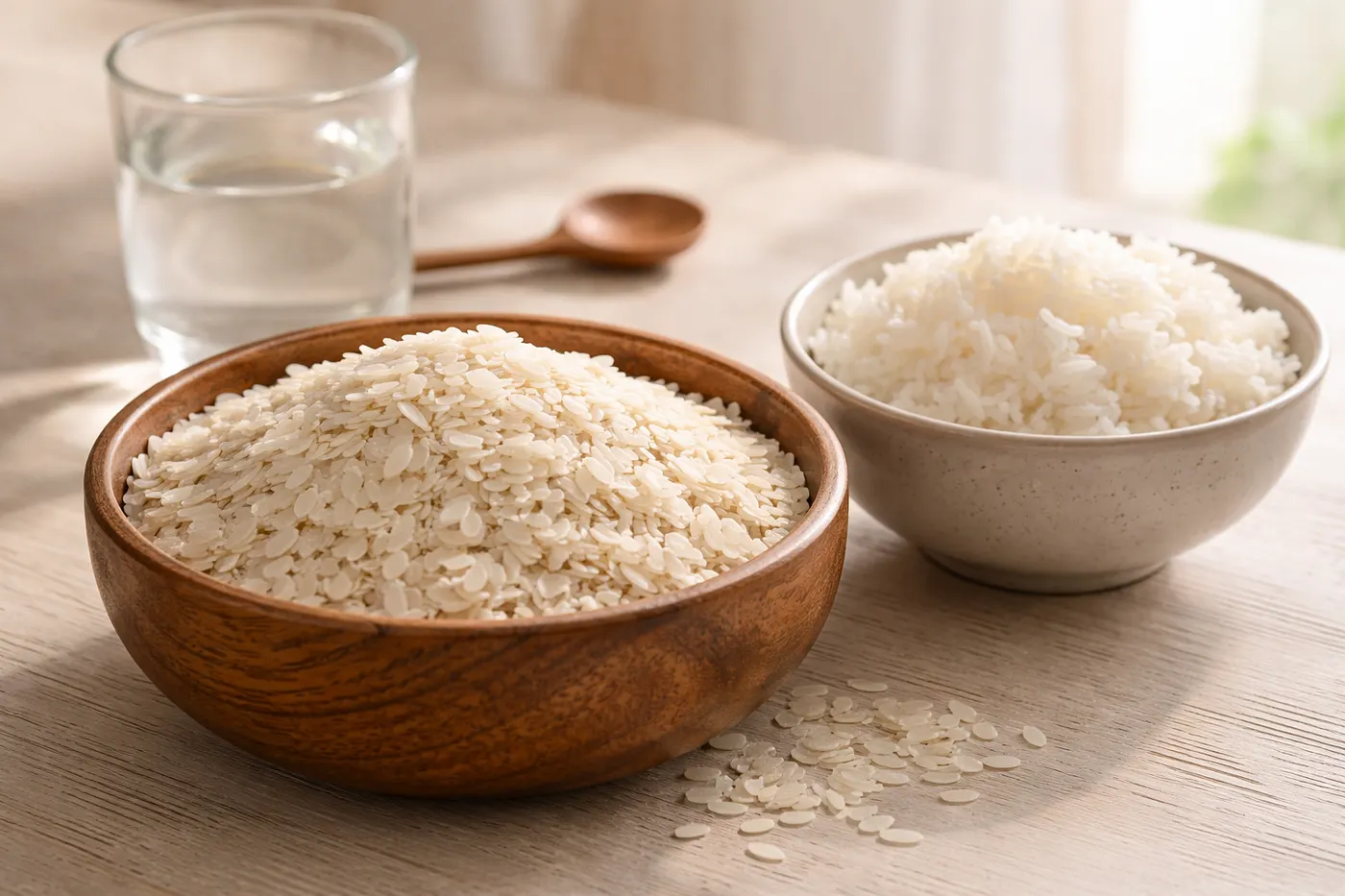
Then I started eating flattened rice (Poha / Aval) — soaked, not cooked.
And something shifted.
No crash.
No urgent hunger.
No mid-morning brain fog.
Just steady energy.
Let's unpack why.
What Is Flattened Rice?
Flattened rice is made from the same grain as regular rice "Oryza sativa", but the processing changes everything.
Traditional preparation:
- Rice is parboiled
- It is rolled flat
- It is dried
That drying phase is the metabolic gamechanger.
When eaten raw (or lightly soaked without cooking), its starch behaves differently inside your body.
Why Flattened Rice Feels Different Than Cooked Rice
At a glance, both are carbohydrates.
Inside your metabolism? They are not the same.
1. The Insulin Story: Slower Glucose Release
Freshly cooked white rice:
- Highly gelatinized starch
- Rapid digestion
- Quick glucose spike
- Higher insulin response
Flattened rice (soaked, not cooked):
- Less re-gelatinization
- Slower enzymatic breakdown
- More gradual glucose release
When you don't cook it again, you preserve its altered starch structure.
Result:
- More stable blood sugar
- Lower insulin surge
- Fewer hunger rebounds
Insulin isn't the enemy. But chronic spikes drive fat storage and cravings. Flattened rice reduces the amplitude of that spike.
2. Resistant Starch: The Hidden Advantage
When rice is parboiled, flattened, and dried, part of its starch undergoes retrogradation.
This creates resistant starch, starch that:
- Escapes digestion in the small intestine
- Feeds beneficial gut bacteria
- Produces short-chain fatty acids (like butyrate)
- Improves insulin sensitivity
Cooking it again reduces some of this effect.
Eating it soaked preserves more of it.
That's the multiplier.
3. Satiety Is Structural, Not Just Caloric
Cooked rice is soft and easy to overeat.
Flattened rice:
- Requires more chewing
- Expands slightly when hydrated
- Slows eating speed
That mechanical delay activates:
- GLP-1 (peptide tyrosine tyrosine)
- Peptide YY (peptide tyrosine tyrosine)
- Gastric stretch receptors
Fullness is not just about calories. It's about digestion speed + texture + hormonal signaling. And texture changes physiology.
4. Why It Helped with Weight Regulation
Here's what likely happened metabolically:
- Lower insulin spikes
- Better glucose stability
- Reduced cravings
- Longer satiety window
- Lower total daily intake
No extreme dieting.
No carb elimination.
Just structural modification.
Sometimes it's not about removing carbohydrates, it's about changing how they behave.
Flattened Rice vs Plain Cooked White Rice
How to Use It for Metabolic Stability
If you want the insulin-regulation benefit:
Soak 5–10 minutes in room-temperature water
Drain excess water.
Add protein
- Yogurt
- Nuts
- Seeds
Add healthy fat
- Coconut
- Peanuts
Add fiber
- Grated carrots
- Cucumber
- Onion
- Curry leaves
The combination further slows glucose absorption.
Who Should Be Careful?
- Individuals with digestive sensitivity should start small
- Diabetics should monitor individual glucose response
- Those needing very low-fiber diets may need moderation
Remember: bio-individuality matters.
Is It Better Than Brown Rice?
Not necessarily.
Brown rice contains:
- More fiber
- More micronutrients
But soaked flattened white rice may produce a lower immediate glucose spike than freshly cooked white rice.
Different tools for different contexts.
Red Poha vs White Poha
Both red and white poha come from the same grain family "Oryza sativa" but the difference lies in processing.
White poha is made from polished white rice.
Red poha is made from unpolished red rice, retaining the bran layer.
That small difference changes the metabolic profile.
The Bigger Lesson
This isn't about rice.
It's about structure.
Processing changes how food behaves.
Digestion speed changes insulin.
Insulin patterns change fat storage and hunger.
As someone who tracks performance, body composition, and metabolic markers seriously, this reminded me:
Small structural changes can produce compounding results.
You don't always need a new diet.
Sometimes you need a smarter version of what you already eat.
Quick Recipe: Simple Metabolic Poha Bowl (5–7 Minutes)
How to Make It:
Soak ½ cup thick poha for 5 minutes. Drain.
Mix with ¼ cup Greek yogurt, chopped cucumber, grated carrot, and 1 tbsp roasted peanuts.
Add salt, lemon, chopped coriander leaves, and a light mustard-seed tempering if desired.
Why It Works:
Carbs (poha) + protein (yogurt) + fat (peanuts) + fiber (vegetables)
→ Slower glucose rise
→ Better satiety
→ Fewer hunger rebounds
Experiment more with other ingredients that have metabolic stability.
Buying Flattened Rice
Choose: Thick Poha (for better satiety + slower digestion)
Upgrade: Red Poha (higher fiber, nuttier taste)
Check: Intact flakes, light cream color, no powder
Avoid: Instant flavored mixes
Store: Airtight, cool, dry — use within 3–6 months
Where to Buy
Best Source: Indian grocery stores (multiple thickness options)
Also Check: International aisle in larger supermarkets (Whole Foods)
Online: Amazon or specialty Indian grocery sites
Ask For: "Poha" or "Aval"
Tip: Fresh stock = better texture + flavor
Eat · Train · Lead Takeaway
Eat with structure.
Train for metabolic flexibility.
Lead your health by understanding physiology — not fads.
Disclaimer
This article is for educational purposes only and does not replace professional medical advice. Individuals with diabetes, metabolic disorders, or gastrointestinal conditions should consult a qualified healthcare provider before making dietary changes.
About the Author
I'm Raj, a performance-driven leader applying the same systems thinking I use in platform engineering to nutrition and metabolic health. I experiment, measure, refine, and simplify. Eat · Train · Lead is my framework for sustainable performance, in body and life.
Flattened rice isn't a miracle food, but the underlying mechanism is real — soaked poha preserves resistant starch and delivers a meaningfully different glucose response than freshly cooked white rice. It's not a replacement for keto or low-carb approaches if that's your protocol, but if you're someone who eats carbs and wants to do it more intelligently, this is one of the easiest swaps available. The 5-minute prep time has no excuse.