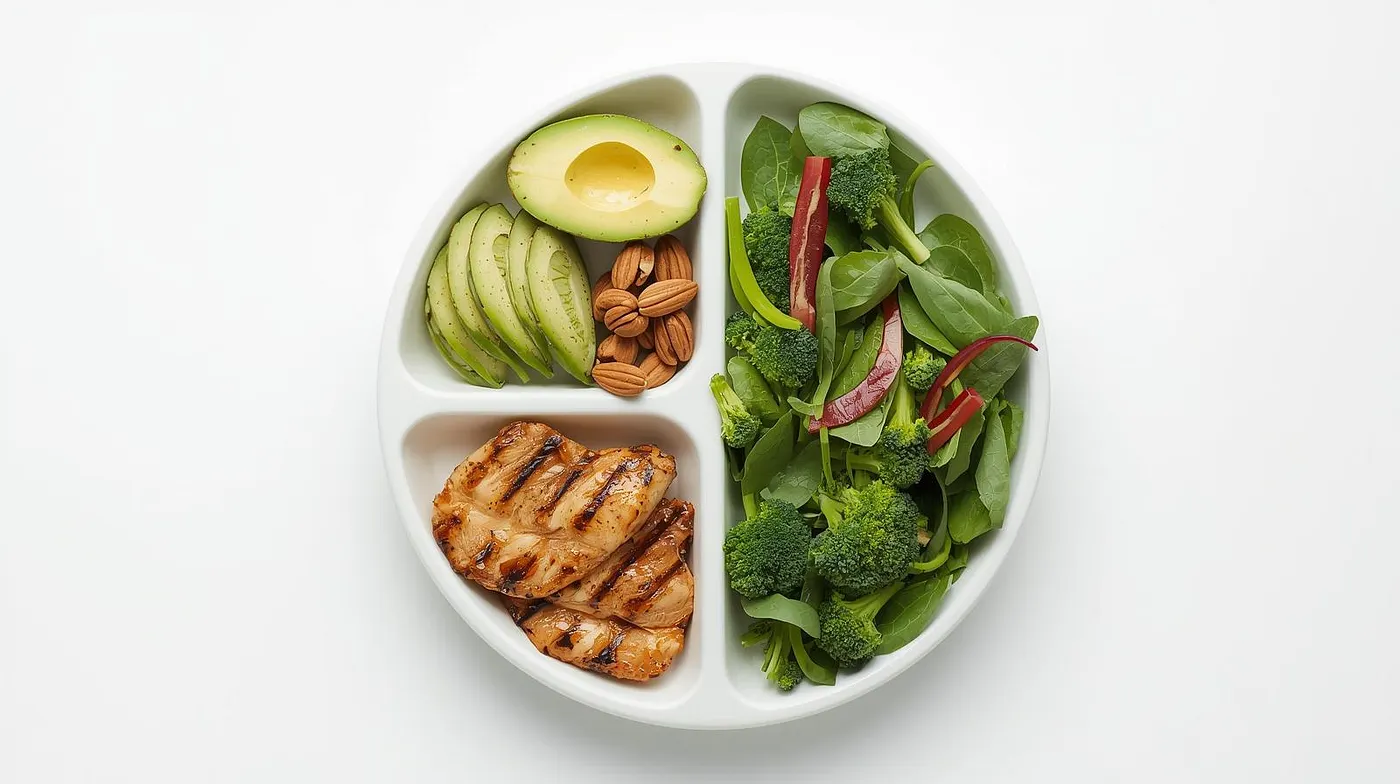
When I first entered ketosis, I thought I’d escaped the world of calorie counting forever. After all, Keto felt different; no hunger, steady energy, food that actually satisfied me.
But a few weeks in, I hit my first plateau. The weight loss slowed, my clothes fit the same, and I started wondering:
“If Keto is supposed to burn fat naturally, why have things stalled?”
That’s when I discovered something that completely reshaped how I viewed nutrition:
“Calories still count — but hormones decide how they behave.”
The New Perspective on Calories
Most of us were taught that “a calorie is a calorie.” Eat less, move more.
Simple math, right?
Except biology isn’t math — it’s chemistry.
Calories represent energy, but how your body processes that energy depends on hormones, especially insulin.
If insulin is high (from constant carbs or snacking), your body stores more of what you eat, even if you’re technically eating fewer calories.
If insulin is low and your body is fat-adapted, you burn more efficiently, even at the same calorie intake.
That’s the magic and the logic of Keto.
But it doesn’t mean calories stop mattering. It means we have to look at them differently.
How Maintenance Calories Work
Every person burns a certain amount of energy daily just to stay alive. That’s your Basal Metabolic Rate (BMR).
Add to that your movement, work, exercise, and stress, and you get your Total Daily Energy Expenditure (TDEE), your maintenance calories. Want your number now? Calculate your BMR & TDEE →
Eat around this number, and your weight stays stable.
Eat below it, and your body draws on fat stores (calorie deficit).
Eat above it, and it stores the excess (calorie surplus).
Even on Keto, this principle remains true. The difference is that Keto helps you stay in a deficit naturally, without hunger or mental exhaustion.
Calculating Your Maintenance
Let’s break it down simply.
Step 1: Estimate your BMR (Basal Metabolic Rate).
- Men = (10×weight in kg) + (6.25×height in cm) – (5×age in years) + 5
- Women =(10×weight in kg) + (6.25×height in cm) – (5×age in years) −161
Example: A 54-year-old man, 80 kg, 178 cm tall.
= (10×80) + (6.25×178) — (5×54) + 5
= 800 + 1112.5–270 + 5 = ~1648 kcal/day
Step 2: Adjust for activity level.
So if he’s moderately active:
1648 × 1.55 = ~2550 kcal/day (maintenance).
That’s how many calories his body needs to maintain weight.
Skip the arithmetic — plug in your own numbers and get your BMR, TDEE, and goal-adjusted calories instantly.
Calculate mine →Setting Your Goal
Once you know your maintenance, adjust slightly based on your goal:
The secret? Stay moderate.
Large deficits slow metabolism: small ones train it.
When I tried cutting 800 calories a day, I felt drained and cold.
When I reduced just 400, my body responded beautifully: energy up, fat down, no cravings.
The Role of Macros: Fat, Protein, and Carbs
Calories tell you how much.
Macros tell you what kind.
Each macro affects hormones differently:
Keto’s magic lies not in cutting calories, but in controlling insulin through the right ratio of these three nutrients.
The Classic Keto Ratio
Most people thrive on a balance close to:
- Fat: 70–75% of total calories
- Protein: 20–25%
- Carbs: 5–10% (typically 20–50g net carbs per day)
Let’s turn that into numbers.
If your daily goal is 2,000 kcal:
That’s the foundation — but it’s a starting point, not a commandment.
The “Energy Logic” of Keto
Here’s what surprised me most:
You don’t have to force-feed fat to “hit your macros.”
When your goal is fat loss, you want your body to burn its own fat, not just dietary fat.
So while 70–75% is the classic ratio, I discovered that listening to my body worked better than chasing numbers.
If I felt full and energized with less fat, I stopped there.
If I needed more satiety, I added olive oil, nuts, or avocado.
Protein: The Hidden Hero
Many beginners' fear protein because “too many turns into sugar.”
That’s exaggerated.
In reality, protein is your best ally:
- It maintains muscle mass (vital during fat loss).
- It reduces hunger.
- It keeps metabolism high.
Aim for 0.8–1.0 grams per pound of lean body weight.
For an 80 kg (176 lb) person with ~20% body fat, that’s 140g × 4 kcal = 560 calories from protein — about 25% of total intake.
Carbs: The Gatekeepers
On Keto, carbs are not the enemy, inconsistency is.
Staying under 25–50g net carbs keeps insulin low and ketones active.
I focus on fiber-rich carbs like spinach, cauliflower, mushrooms, broccoli, and a handful of berries.
It’s not about avoidance; it’s about precision.
How I Found My Balance
During my first few months of Keto, I experimented.
At first, I ate too much fat, everything drenched in butter and cream. I stayed in ketosis but didn’t lose much weight. Then I lowered fat slightly, increased protein, and suddenly, progress resumed.
That’s when I realized Keto isn’t about eating fat. It’s about burning it.
Once my hunger signals reset, I started trusting my body’s feedback more than any macro calculator. Some days I naturally ate less, other days, more.
But my energy stayed constant.
Tools I Used to Track
For awareness, I tracked my meals for two weeks using:
- MyFitnessPal — customizable macro goals.
- Carb Manager — simple, visual tracking for Keto ratios.
- Cronometer — highly accurate, detailed nutrient breakdowns.
- USDA Food Data Central — for reliable reference data.
After those two weeks, I could eyeball meals and know roughly where I stood. Tracking became optional.
“Tracking isn’t control — it’s education. Once you learn, you can let go.”
Sample Day: Fat-Loss Macros in Action
Let’s take a 2,000-kcal plan (25g net carbs, 100g protein, 165g fat).
- Total Calories ~1900–2000
- Macro Balance ~70/25/5 ratio
No starvation. No stress. Just structure and satisfaction.
When You Hit a Plateau
Plateaus are part of every body’s learning curve.
If your progress stalls for more than 2–3 weeks:
- Check your portions. Keto foods are calorie-dense — nuts, cheese, and oils add up fast.
- Reassess your fat intake. Cut 100–150 kcal from added fats (not protein).
- Recheck your hydration and sleep. Both affect metabolism more than we realize.
- Consider light fasting. A 16:8 window or an occasional 24-hour fast resets insulin beautifully.
Your goal is consistency, not punishment.
Maintenance Mode
Once you reach your goal, increase calories gradually — about 100–150 kcal per week, until your weight stabilizes.
Stay mindful of carb reintroduction; choose slow-burning sources like quinoa, lentils, or berries. Your body’s new insulin sensitivity makes you more responsive, use it wisely.
That’s the beauty of metabolic flexibility: you can enjoy variety without losing balance.
What I Learned
Learning to balance calories and macros didn’t take the joy out of Keto, it gave me confidence.
I stopped fearing food.
I stopped eating mindlessly.
And I started understanding how my body communicates through hunger, energy, and focus.
“Counting calories was about control. Understanding them became about connection.”
The Journey Ahead
Now that you understand the balance between calories, macros, and hormones, you’re ready to bring it all to life with real meals, flavors, textures, and variety.
In the next chapter, I’ll take you into my kitchen. How I built plates that nourish body and mind, sample Keto breakfasts, lunches, dinners, and even guilt-free snacks and desserts.
Calories still count on keto — they just behave differently when insulin is low. The ratio target (70/25/5) is a starting point, not a commandment. The real skill is learning to distinguish dietary fat you eat from stored fat your body burns: once you’re fat-adapted, less added dietary fat means more body fat used for fuel.
Because the best part of Keto isn’t what you remove. It’s what you rediscover.
“Food isn’t the enemy. It’s the language of energy — and Keto helps you speak it fluently.”
New to this series?
Begin your journey with Chapter 1: Why Everyone’s Talking About Keto — and What It Really Means to discover how your body’s energy system really works — gently, naturally, and at your own pace
If this resonated, explore the other dimension of Eat · Train · Lead
About the Author
Raj Chanolian is a learner of metabolic science and mindful living. He writes about nutrition, movement, and the intersection of modern science with everyday health habits. His goal is to simplify the physiology behind Keto, making it practical, joyful, and sustainable — for real people with real lives.
What I'd Actually Do
- Calculate your TDEE once using the Mifflin-St Jeor formula, then run a 300–400 calorie deficit — not more. Large deficits slow your metabolism and create misery.
- Track your food for just two weeks using Cronometer or Carb Manager. The goal is education, not permanent logging. After two weeks, you can eyeball portions accurately.
- If you plateau after 3 weeks, cut 100–150 kcal from added fats (butter, oils, nuts) first — not from protein.
- Don't fear protein converting to glucose — it's demand-driven and only happens when the body needs it, not just because you ate a chicken breast.
- When hunger resets and you're naturally eating 2 meals a day, stop tracking. Trust the signal.
- Talk to a clinician if you have a history of disordered eating or significant calorie restriction before following deficit targets.
This content is for educational purposes only and not a substitute for professional medical advice. Always consult your healthcare provider before starting any diet or fasting plan.