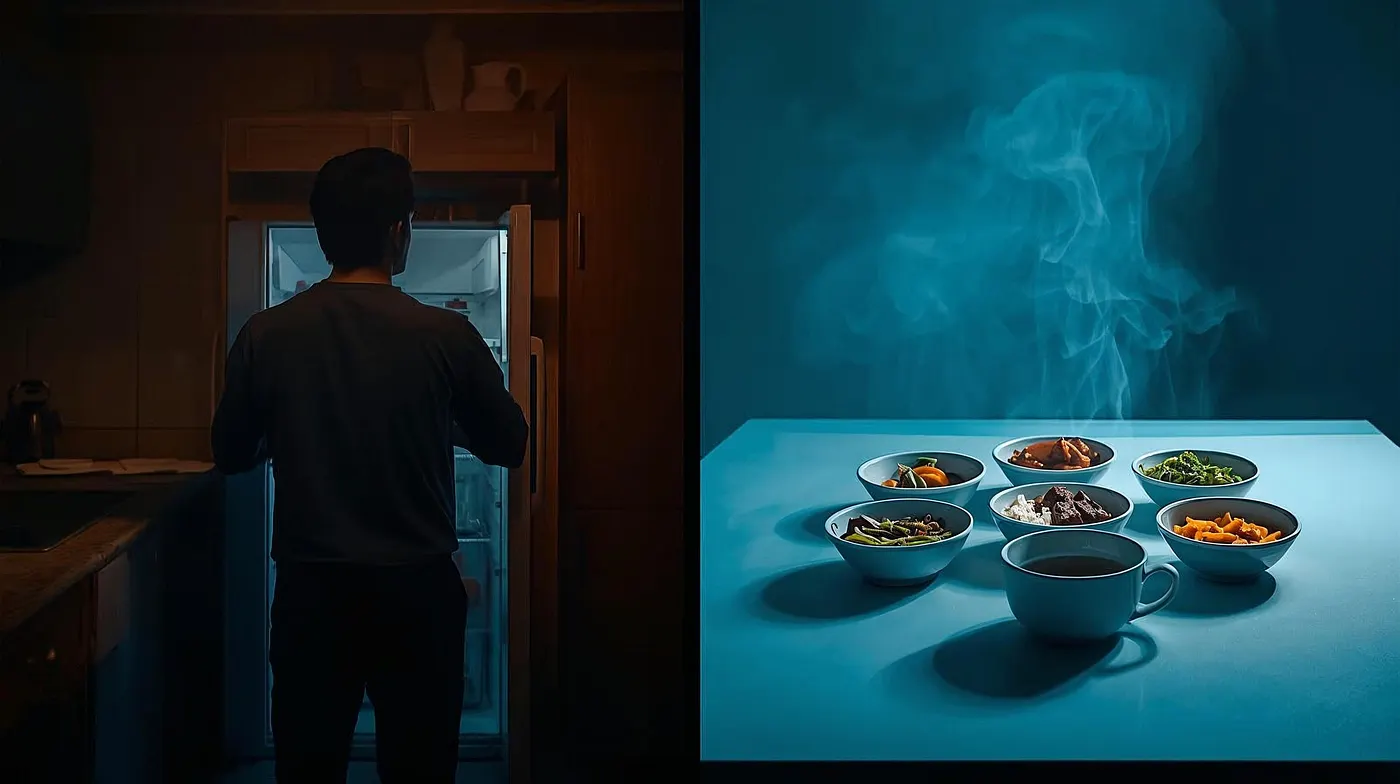
I’ve spent years understanding low-carb, keto, and fat adaptation.
They work — no question.
But I also realized something important:
It’s not just what you eat that matters.
It’s how you eat, especially when carbs are on your plate.
You’re Not Overeating — You’re Eating Wrong.
And that’s why no diet has ever worked for you long-term.
You’ve tried to eat less. You’ve tried to eat “clean.” You’ve even ignored your hunger, hoping discipline would carry you through.
But somehow, the cravings keep coming back, and the weight doesn’t stay off.
What if the problem isn’t how much you eat… but how you eat every single meal without realizing it?
The Problem No One Wants to Admit
You’ve been told:
- Carbs make you fat
- Eating late ruins your metabolism
- Calories are everything
- Hunger is something to ignore
So you track every bite.
You shrink your meals.
You fight your cravings like it’s a daily battle.
And for a while… it works.
Until it doesn’t.
Because eventually:
- You feel constantly hungry
- You start craving everything
- Your energy crashes
- And your “willpower” runs out
Not because you’re weak
But because your system is broken
Meanwhile… Something Strange Happens Elsewhere
Across the world, there are cultures where people:
- Eat rice, noodles, and carbs daily
- Don’t obsess over calories
- Rarely snack mindlessly
- And stay naturally lean
This isn’t magic.
It isn’t genetics.
It’s structure.
Countries like Japan don’t rely on discipline.
They rely on habits that make overeating difficult, and satisfaction automatic.
The 7 Eating Habits That Fix Your Relationship With Food
Before we get into the habits, there’s one thing you need to understand, most people don’t overeat because they’re hungry.
They overeat because their environment quietly pushes them to.
The plate you use.
The speed you eat.
Even the order your food touches your mouth.
These aren’t small details, they’re invisible triggers that decide whether you feel satisfied… or stuck in a loop of cravings.
Fix these, and you don’t need more discipline.
You need a better system.
And the first shift starts with something so simple, you’ll overlook it, the way your plate is set up.
This one change alone can reduce how much you eat, without you even noticing.
Habit 1: Stop Eating From One Giant Plate
When you pile everything onto one large plate, your brain sees:
“One thing to finish.”
So you keep eating, even when you’re full.
Now flip it.
Break your meal into:
- A small protein portion
- A vegetable side (or two)
- A carb source
- A light soup or broth
Suddenly your brain sees:
“A full table. A complete meal.”
Same calories.
More satisfaction.
Less overeating.
Habit 2: Slow Down — Your Body Isn’t a Machine
You’re not overeating because you eat too much.
You’re overeating because you eat too fast.
Your body needs ~20 minutes to say:
“I’m full.”
If you finish your meal in 8 minutes, you’ve already overshot.
Simple fix:
- Smaller bites
- Put utensils down between bites
- Breathe while eating
This alone can reduce calorie intake without trying
Habit 3: Respect Digestion (Stop Shock Eating)
Ever feel bloated after a “healthy” meal?
It’s often not the food.
It’s how you consume it.
Instead of:
- Rushing
- Gulping large cold drinks
- Eating distracted
Shift to:
- Calm eating
- Smaller sips
- Warm or room-temperature drinks
Your digestion works with you, not against you
Habit 4: Build Your Plate by Color, Not Calories
Instead of asking:
“How many calories is this?”
Ask:
“How many colors are on my plate?”
Aim for:
- Green (leafy vegetables)
- Red (tomatoes, peppers)
- Yellow (eggs, squash, citrus)
- White (rice, fish, yogurt)
- Dark (beans, mushrooms, seaweed)
More colors = more nutrients
More nutrients = more satiety
More satiety = fewer cravings
Habit 5: Feed Your Gut Daily (Not Occasionally)
Your metabolism isn’t just about calories.
It’s about your gut ecosystem.
Include daily:
- Yogurt or kefir
- Pickled vegetables
- Fermented foods like Miso soup or Kimchi
Better digestion
Better energy extraction
Better hunger control
Habit 6: Chew Like Your Health Depends On It
Because it does.
When you rush food:
- Blood sugar spikes
- Then crashes
- Then cravings hit
When you slow down and chew:
- Digestion improves
- Blood sugar stabilizes
- Hunger signals normalize
You don’t need more discipline
You need slower bites
Habit 7: Stop Fearing Carbs — Start Sequencing Them
Carbs aren’t the problem.
Context is.
Instead of eating carbs first:
- Start with vegetables (fiber)
- Then protein + fats
- Then carbs (rice, bread, etc.)
This slows glucose release
Prevents spikes and crashes
Keeps energy stable
Same food.
Different order.
Different outcome.
The Real Shift (This Changes Everything)
You’ve been trying to control food with willpower.
But the people who stay lean long-term don’t rely on willpower.
They rely on design.
Design your meals →
Design your behavior →
Your body follows automatically
ETL Takeaway (Eat · Train · Lead)
EAT
Don’t restrict food.
Structure it.
TRAIN
Don’t fight hunger.
Understand it.
LEAD
Don’t depend on discipline.
Build systems that make success inevitable.
Final Thought
You don’t need a new diet.
You need a new relationship with food.
One where:
- You enjoy eating
- You feel full
- You stop obsessing
- And your body finally works with you
The "eating less" framework fails long-term because hunger is a physiological signal, not a character flaw. Structural habits — plate composition, eating pace, food sequencing, gut-friendly fermented foods — work because they align with how the body actually signals satiety, regulates blood sugar, and avoids the cravings spiral. These aren't tricks; they're the missing design layer that most diets skip entirely. You don't need more discipline. You need a better setup.
Disclaimer
This article is for educational purposes only and is not medical advice. Individual nutritional needs vary. Consult a qualified healthcare professional for personalized guidance.
Your maintenance calories are the number every goal adjusts around. Get yours in about ten seconds.
Calculate your BMR & TDEE →What I'd Actually Do
- Start eating from smaller plates or separate components this week. Not to restrict — to restructure the brain's "this is a complete meal" signal.
- Eat the vegetables first. Every meal. Just this one sequencing change affects blood sugar response and how long you stay full.
- Put your fork down between bites at your next meal. Time it. You'll be surprised how fast you normally eat and how much more satisfied you feel when you slow down.
- Add one fermented food daily — a spoonful of yogurt, some kimchi, a bit of miso. Your gut microbiome shapes hunger signals more than most people realize.
- Stop keeping foods in view that you don't want to eat mindlessly. Environmental design outperforms willpower every time you're tired or stressed.
- Talk to a clinician if you notice persistent blood sugar crashes, binge-restrict cycling, or strong emotional connections to specific foods — these deserve a more targeted conversation than any 7-habit framework can provide.