A few years ago, I hit a plateau.
There was a time when I thought feeling a little stiff in the morning was just part of getting older.
Not injured.
Not sick.
Just… slower.
A little more inflammation after training.
A little more brain fog in the afternoon.
A little more effort required to feel sharp, light, and energized.
Like many people, I looked first at the obvious places.
Maybe I needed more protein.
Maybe I needed fewer carbs.
Maybe I needed another supplement.
Maybe I needed to train harder.
But the more I studied nutrition, aging, and recovery, the more I realized something important:
My body was not just asking for fewer bad foods.
It was asking for more intelligent foods.
More color.
More plant chemistry.
More compounds that tell the body how to repair, regulate, and recover.
That is where the high-polyphenol diet enters the picture.
Not as another trend.
Not as a restrictive meal plan.
But as one of the most overlooked nutritional upgrades for people over 40 who want better energy, lower inflammation, sharper thinking, and long-term metabolic resilience.
The Modern Diet Is Calorie-Rich but Compound-Poor
Most modern eating advice revolves around three things:
Calories.
Macros.
Weight loss.
And those matter.
But they are not the whole story.
A meal can be high in protein and still be low in protective compounds.
A diet can hit the right calorie target and still lack color.
A person can eat “clean” and still miss the plant chemistry their body needs.
That is the hidden problem.
Modern food is often engineered for convenience, shelf life, and taste. But traditional diets were rich in something we have quietly reduced:
Polyphenols.
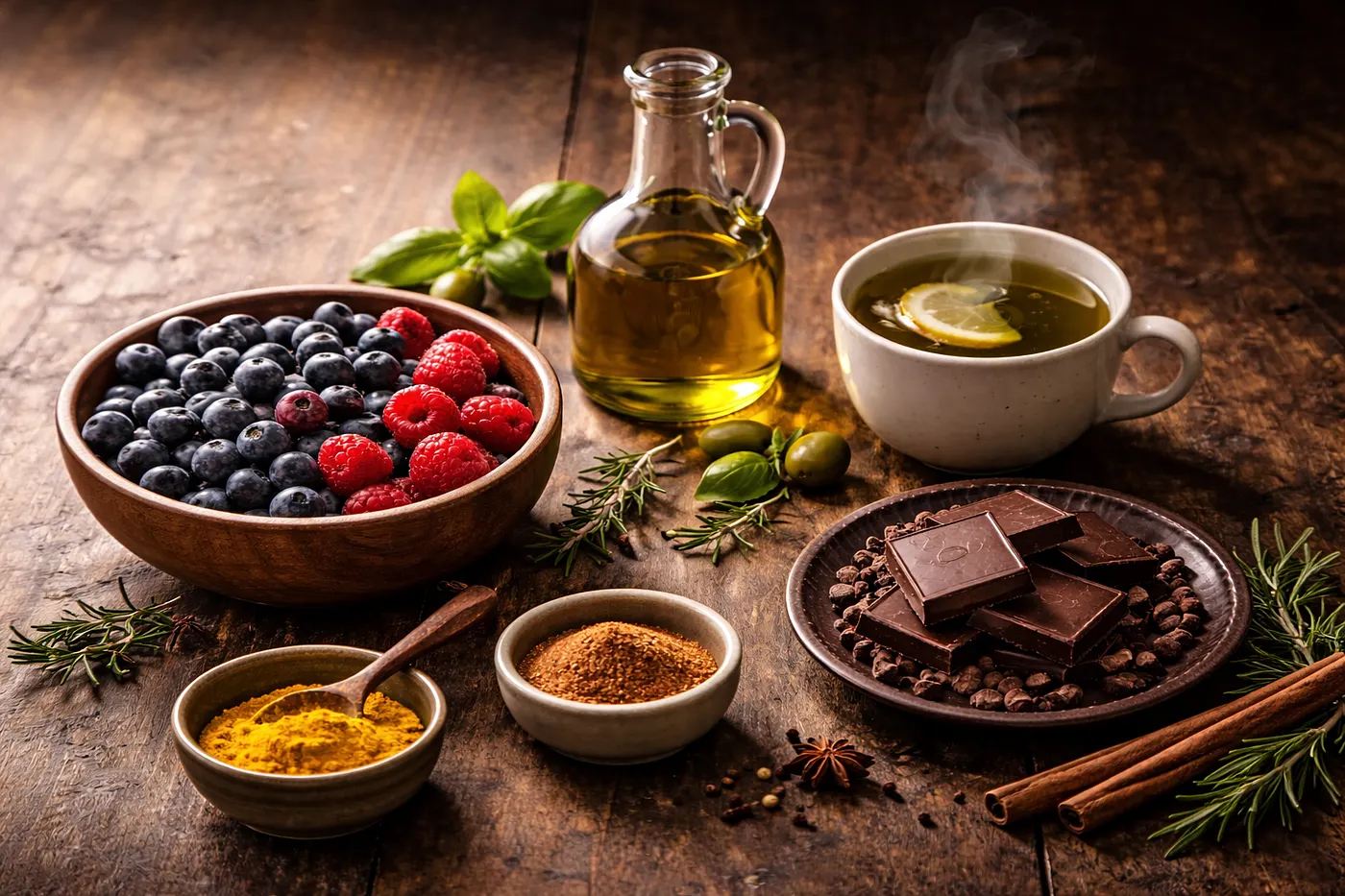
These are natural compounds found in plants, especially deeply colored fruits, vegetables, herbs, spices, tea, coffee, cocoa, and extra virgin olive oil.
They are part of what gives blueberries their deep purple color, olive oil its peppery bite, green tea its bitterness, and dark chocolate its intensity.
In plants, polyphenols act like defense chemicals.
In humans, they appear to support our own defense systems.
What Polyphenols Do Inside the Body
Polyphenols are not magic.
They are not a shortcut.
But they are powerful because they work through several mechanisms that matter more as we age.
They help reduce oxidative stress.
They support healthier inflammatory responses.
They interact with the gut microbiome.
They may improve insulin sensitivity.
They support blood vessel function.
They may play a role in cognitive and metabolic health.
The most interesting part is the gut.
Many polyphenols are not fully absorbed in the small intestine. Instead, they travel to the colon, where gut bacteria help transform them into smaller bioactive compounds.
In simple terms:
Your gut bacteria help unlock the benefits of plant compounds.
This is why a high-polyphenol diet is not just an “antioxidant diet.”
It is a gut-health diet.
A metabolic-health diet.
A brain-health diet.
A longevity diet.
Why Scientists Are Paying Attention
Scientists are especially interested in polyphenols because they appear to influence several of the same systems associated with aging itself: oxidative stress, chronic inflammation, insulin sensitivity, vascular function, and the gut microbiome. Rather than acting like a single “miracle nutrient,” polyphenols behave more like biological signals, interacting with the body’s repair, defense, and recovery pathways in subtle but meaningful ways over time.
A high-polyphenol eating pattern does not work because of one superfood. It works because repeated exposure to diverse plant compounds appears to support the body’s long-term regulation systems, especially inflammation, metabolism, vascular health, and the gut microbiome.
The Symptoms People Usually Notice First
Most people do not wake up and say, “I need more polyphenols.”
They say:
“I feel inflamed.”
“I feel older than I should.”
“My recovery is slower.”
“My belly fat is harder to lose.”
“I crash in the afternoon.”
“My thinking is not as sharp.”
“My body feels heavier.”
“I eat healthy, but something still feels missing.”
That “something missing” may not always be another supplement.
Sometimes it is food quality at the compound level.
Not just protein, carbs, and fat.
But color, bitterness, aroma, and plant diversity.
The High-Polyphenol Foods Worth Adding
You do not need exotic superfoods.
You can start with simple, familiar foods.
Berries
Blueberries, raspberries, blackberries, and strawberries are rich in anthocyanins, the compounds that give many berries their deep red, blue, and purple colors.
They are among the easiest ways to add polyphenols daily.
Extra Virgin Olive Oil
Good olive oil is not just fat.
It contains polyphenols such as hydroxytyrosol and oleuropein, especially when it has that slightly peppery finish.
This is one reason the Mediterranean diet has been studied so heavily for heart and metabolic health.
Green Tea
Green tea contains catechins, especially EGCG, which has been studied for metabolism, oxidative stress, and cellular health.
It is also a great replacement for another sugary afternoon drink.
Coffee
For many people, coffee is actually one of the largest daily sources of polyphenols.
The key is not turning it into dessert with sugar-heavy add-ins.
Dark Chocolate
Not milk chocolate.
Dark chocolate.
Especially 85% or higher.
Cocoa contains flavanols that may support blood flow and vascular function. A square or two can be a smart addition when used intentionally.
Spices and Herbs
Turmeric, cinnamon, rosemary, oregano, cloves, ginger, and thyme are small but powerful.
Spices are concentrated plant chemistry.
A boring meal becomes more functional when you add herbs and spices.
The Daily Polyphenol Stack
Here is a simple way to incorporate this without overthinking it.
Morning
Green tea or coffee
Add cinnamon if appropriate
Lunch
Large salad or cooked greens
Extra virgin olive oil
Herbs, onions, or colorful vegetables
Snack
Berries
One or two squares of dark chocolate
Dinner
Colorful vegetables
Spices and herbs
Olive oil-based dressing or drizzle
This is not complicated.
The goal is not perfection.
The goal is daily exposure.
Smart Food Combinations
Some combinations work especially well.
Olive Oil + Vegetables
Fat helps carry certain plant compounds and makes vegetables more satisfying.
Turmeric + Black Pepper
Black pepper may improve the bioavailability of curcumin, turmeric’s active compound.
Green Tea + Lemon
Vitamin C can help stabilize some tea catechins.
Berries + Dark Chocolate
A simple combination rich in different flavonoids.
Coffee + Cinnamon
A practical morning upgrade that adds flavor without sugar.
Who Benefits Most?
A high-polyphenol diet can be especially useful for:
- Adults over 40
- High-stress professionals
- Active individuals
- People who train regularly
- Those concerned about metabolic health
- People with brain fog or afternoon energy crashes
- Anyone trying to reduce low-grade inflammation through food quality
This is where it connects naturally:
- Eat to lower the internal noise.
- Train with better recovery.
- Lead with clearer energy.
Because your biology is never separate from your performance.
Who Should Be Careful?
Even healthy foods need context.
You may need to be careful with high-polyphenol foods if you:
Take blood-thinning medication
Have iron deficiency
Are sensitive to caffeine
Have reflux or digestive irritation
Are on medication that interacts with grapefruit, herbs, or concentrated extracts
Use high-dose polyphenol supplements
Food-based polyphenols are generally safer than concentrated supplements, but if you have a medical condition or take medication, check with a qualified healthcare professional.
Also, do not use polyphenols as an excuse to ignore basics.
Sleep still matters.
Protein still matters.
Strength training still matters.
Walking still matters.
Stress management still matters.
Polyphenols support the system.
They do not replace the system.
A meal can be high in protein and still be low in protective compounds. A diet can hit the right calorie target and still lack color.
The Mistake People Make
The biggest mistake is trying to turn this into another strict diet.
That is not the point.
You do not need to become vegan.
You do not need to quit coffee.
You do not need to eat perfect salads every day.
You do not need to buy expensive powders.
Start by adding.
Add berries to breakfast.
Add olive oil to lunch.
Add herbs to dinner.
Add green tea in the afternoon.
Add dark chocolate instead of a processed dessert.
A high-polyphenol diet is not built through restriction.
It is built through intelligent repetition.
The 7-Day Starter Challenge
For the next seven days, try this:
One serving of berries daily
One tablespoon of extra virgin olive oil daily
One cup of green tea or coffee daily
One herb or spice added to a meal daily
One colorful vegetable at lunch or dinner daily
One small square of dark chocolate if desired
That is it.
No calorie counting required.
No complicated meal plan.
No moral drama around food.
Just give your body more color and observe what happens.
The Real Lesson
After 40, the body becomes less forgiving.
Not broken.
Just more honest.
It tells you when food quality is low.
It tells you when inflammation is high.
It tells you when stress is winning.
It tells you when recovery is not keeping up.
The answer is not always to push harder.
Sometimes the answer is to nourish deeper.
A high-polyphenol diet reminds us that food is not just fuel.
Food is instruction.
And color is one of the oldest languages the body understands.
Final Thought
A high-polyphenol diet is not a trend.
It is ancestral wisdom rediscovered through modern biochemistry.
If you:
- Want metabolic clarity
- Care about long-term healthspan
- Value sustainable performance
Then start simple.
Add color.
Add herbs.
Add olive oil.
Add berries.
Your body doesn’t just count calories.
It listens to chemistry.
The science on polyphenols is genuinely promising — not because any single food is magic, but because consistent exposure to diverse plant compounds appears to support the systems that decline fastest after 40: inflammation regulation, gut health, insulin sensitivity, and vascular function. You don't need to overhaul your diet. You need to add color and variety to what you're already eating. Start with berries, good olive oil, green tea, and herbs — that alone is more impactful than most supplements.
ETL Takeaway
Eat: Add color before cutting calories.
Train: Lower inflammation so recovery can improve.
Lead: Stable biology creates clearer decisions.
Your body may not be aging normally.
It may simply be running low on the plant compounds it was designed to use.
Start there.
Start with color.
Disclaimer
This article is for educational purposes only and is not medical advice. Consult a qualified healthcare professional before making significant dietary changes, especially if you have underlying health conditions or take medications.
Your maintenance calories are the number every goal adjusts around. Get yours in about ten seconds.
Calculate your BMR & TDEE →What I'd Actually Do
- Add berries to breakfast every day for the next week. Frozen work just as well as fresh — this is not about being precious, it's about consistency.
- Switch to extra virgin olive oil as your primary cooking and finishing fat. The peppery finish means the polyphenols are still intact.
- Add one herb or spice to each dinner — turmeric, rosemary, cinnamon, ginger. These are concentrated plant chemistry, not garnish.
- Swap an afternoon snack for a cup of green tea. You get catechins, a mild energy boost, and one fewer processed food decision.
- If you drink coffee, you're already getting one of the largest daily polyphenol sources most people overlook. Don't wreck it with sugar-heavy add-ins.
- Talk to a clinician if you're on blood thinners, iron-deficient, or take medications that interact with grapefruit or herbal compounds — food-based polyphenols are generally safe, but high-dose supplements are a different conversation.