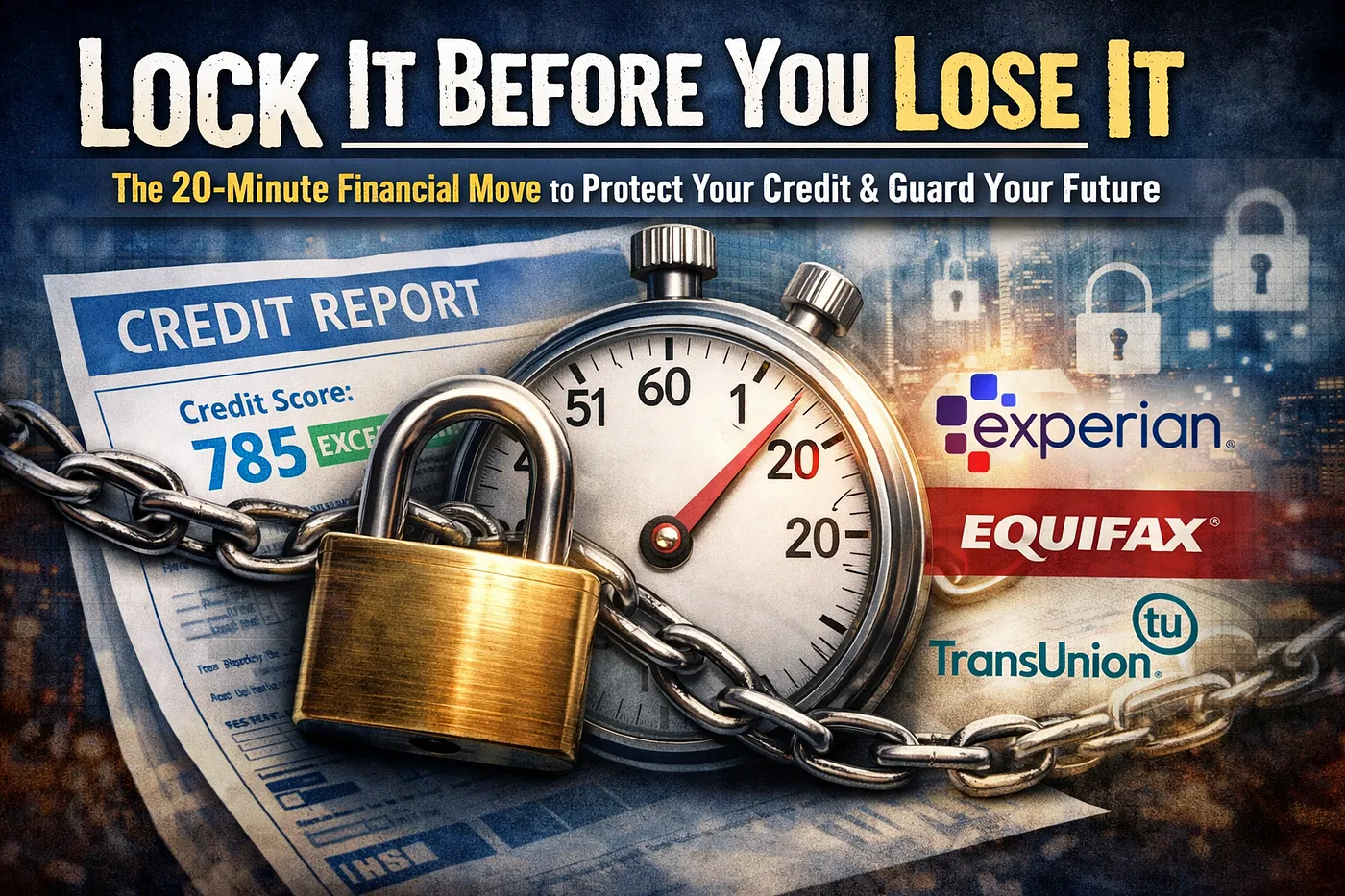
You wouldn’t leave your front door unlocked overnight.
You wouldn’t hand your Social Security number to a stranger.
But millions of financially responsible adults leave their credit files wide open, quietly exposed to identity theft.
And the fix?
It takes 20 minutes.
It’s free.
And it might save you years of damage control.
Let’s break this down properly.
First: What Are the Three Credit Bureaus (And Why They Matter)?
In the United States, three major credit reporting agencies collect and store your financial data:
- Experian
- Equifax
- TransUnion
They don’t lend money.
They don’t issue credit cards.
They don’t approve loans.
They collect data about how you borrow and repay money, and then calculate your creditworthiness.
Lenders, landlords, insurers, and sometimes employers use this information to decide:
- Can you borrow?
- What interest rate will you pay?
- How risky are you?
What Exactly Is a Credit Score?
A credit score is a three-digit number, typically between 300 and 850, that represents your credit risk.
The most widely used scoring model is the FICO score.
Score Ranges (General Guide)
- 800–850 → Exceptional
- 740–799 → Very Good
- 670–739 → Good
- 580–669 → Fair
- Below 580 → Poor
Higher score = lower perceived risk = better rates.
Even a 50-point difference can cost (or save) you thousands in mortgage interest.
Why You Should Freeze Your Credit (In All Three Bureaus)
Let’s get straight to it.
A credit freeze blocks lenders from accessing your credit file.
If a criminal tries to open a loan in your name, the lender can’t see your report → application gets denied.
Why freeze in ALL three?
Because lenders may check:
- Experian only
- Equifax only
- TransUnion only
- Or a combination
If you freeze only one, the others remain open doors.
Benefits of Freezing Your Credit
1. Prevents New Fraudulent Accounts
Identity thieves cannot open:
- Credit cards
- Personal loans
- Auto loans
- Store financing
- Mortgage lines
2. It’s FREE (By Law)
Since 2018, freezing and unfreezing is legally free.
3. No Impact on Your Credit Score
Freezing does not hurt your score.
4. You Keep Full Control
You can:
- Temporarily lift it
- Permanently unfreeze
- Lift it for a specific lender
What a Credit Freeze DOES NOT Do
Important clarity:
- It does NOT stop fraud on existing accounts
- It does NOT block credit monitoring
- It does NOT lower your score
- It does NOT prevent you from checking your own credit
It simply prevents new credit from being opened.
How to Freeze Your Credit (Step-by-Step)
You must freeze with each bureau individually:
- Experian
- Equifax
- TransUnion
“Always verify you are on the official domain before entering personal information.”
Freeze / Unfreeze Portal:
Experian: https://www.experian.com/freeze/center.html
Equifax: https://www.equifax.com/personal/credit-report-services/
TransUnion: https://www.transunion.com/credit-freeze
Process:
- Go to each bureau’s official website.
- Create an account.
- Verify identity.
- Request freeze.
- Save your PIN or login credentials.
Total time: ~20 minutes.
When Should You Freeze Your Credit?
You SHOULD freeze if:
- You are not applying for credit soon.
- You want proactive identity theft protection.
- Your SSN has been exposed.
- You’ve had data breach alerts.
- You want “set it and forget it” protection.
You MAY NOT freeze if:
You are actively applying for:
- Mortgage
- Car loan
- Business credit
- Refinancing
But even then, you can temporarily lift it.
When to Unfreeze (And How)
Unfreeze before:
- Applying for a loan
- Opening a new credit card
- Renting an apartment
- Applying for certain jobs
- Setting up utilities
You can:
- Lift freeze for a specific time window (e.g., 7 days)
- Lift for a specific creditor
- Fully unfreeze
Most lifts are instant online.
What Impacts Your Credit Score?
1. Payment History (35%)
Most important factor.
- Late payments
- Missed payments
- Collections
- Bankruptcies
Even one 30-day late can drop your score 60–100 points.
2. Credit Utilization (30%)
How much of your available credit you’re using.
Formula:
Balance ÷ Total Credit Limit = Utilization %Ideal: Under 10%
Acceptable: Under 30
Danger zone: Above 50%
3. Length of Credit History (15%)
Older accounts help.
Do NOT close your oldest card casually.
4. New Credit (10%)
Too many hard inquiries in short time = risky behavior.
5. Credit Mix (10%)
Mix of:
- Credit cards
- Installment loans
- Mortgage
- Auto loan
When to Make Monthly Payments So They Don’t Hurt Your Score
This is where most people get it wrong.
Important Distinction:
- Due date is NOT what affects utilization.
- Statement closing date is what gets reported.
Example:
- Credit limit: $10,000
- You spend $5,000
- Statement closes → 50% utilization reported
- Even if you pay full next day
To optimize score:
Strategy:
- Pay balance down before statement closes.
- Leave small balance (1–5%).
- Let statement generate.
- Pay remaining balance before due date.
This shows:
- Responsible usage
- Low utilization
- No interest paid
How to Improve Your Credit Score (Strategic Plan)
Step 1: Automate Minimum Payments
Never miss a payment.
Step 2: Keep Utilization Under 10%
Spread purchases across cards if needed.
Step 3: Don’t Close Old Cards
Even if you don’t use them.
Step 4: Avoid Unnecessary Hard Inquiries
Rate shop within short windows when needed.
Step 5: Monitor Reports Annually
You can get free reports yearly.
What Happens If You Don’t Freeze Your Credit?
Let’s be blunt.
If someone opens a fraudulent loan:
- You may not notice for months.
- Collections may hit your report.
- Score can drop 100+ points.
- Mortgage approval may get delayed.
- You’ll spend hours disputing errors.
Prevention is easier than repair. Freezing your credit takes 20 minutes. Recovering from identity theft takes years.
Prevention is easier than repair.
Who Should DEFINITELY Freeze Credit?
- High-income professionals
- Business owners
- Anyone with large credit limits
- Parents (freeze children’s credit too)
- Retirees (targeted heavily)
- Anyone not actively borrowing
If you value long-term financial efficiency, this is a no-brainer.
Frequently Asked Questions
Does freezing hurt my credit?
No.
Does it affect existing cards?
No.
Is fraud alert same as freeze?
No. Fraud alert is weaker protection.
Can lenders still review existing accounts?
Yes.
The Bigger Lesson
High performers track:
- Steps
- Macros
- Investments
- Net worth
But ignore the one number that determines the cost of their future leverage.
Your credit score isn’t about borrowing recklessly.
It’s about borrowing strategically, when it matters.
And protecting it at all times.
Bonus: Official Free Report
You should also review your reports regularly.
Official free report site (federally authorized):
https://www.annualcreditreport.com
This allows you to:
- Pull reports from all three bureaus
- Check for errors
- Monitor suspicious activity
Final Takeaway
Freezing your credit isn’t fear-based.
It’s disciplined.
You lock your doors.
You password-protect your devices.
You diversify investments.
Freezing your credit is the same mindset.
Quiet protection.
Full control.
Long-term advantage.
Freezing your credit is the most asymmetric protective action available to any adult in the US. The downside is 20 minutes of setup and occasionally a 2-minute unfreeze before a loan application. The upside is closing the front door on the most common form of financial identity theft. It's free by law, doesn't affect your credit score, and doesn't affect existing accounts. The only reason most people haven't done it is inertia — not because it's complicated or risky. If you have high income, significant assets, or have been in any data breach in the past five years, this is overdue.
Disclaimer
This article is for educational purposes only and does not constitute financial or legal advice. Credit strategies vary by individual circumstances. Consult a qualified financial professional before making major decisions.
What I'd Actually Do
- This week: freeze your credit at all three bureaus. Go to Experian, Equifax, and TransUnion individually. Takes about 20 minutes total. Save your PINs or login credentials somewhere secure (password manager, not a sticky note).
- Also freeze your children's credit if you have kids under 18 — they're common targets because the theft often goes undetected for years until they apply for their first loan or apartment.
- Review your free credit report from annualcreditreport.com at least once per year. Look for accounts you don't recognize, addresses you've never lived at, or inquiries you didn't authorize.
- Optimize your utilization timing: pay your balance down before your statement closing date, not just before your due date. The statement closing date is when utilization gets reported — most people don't know this and it's costing them score points.
- Don't close your oldest credit card even if you don't use it. Length of credit history is 15% of your score, and closing old accounts shortens your average account age.