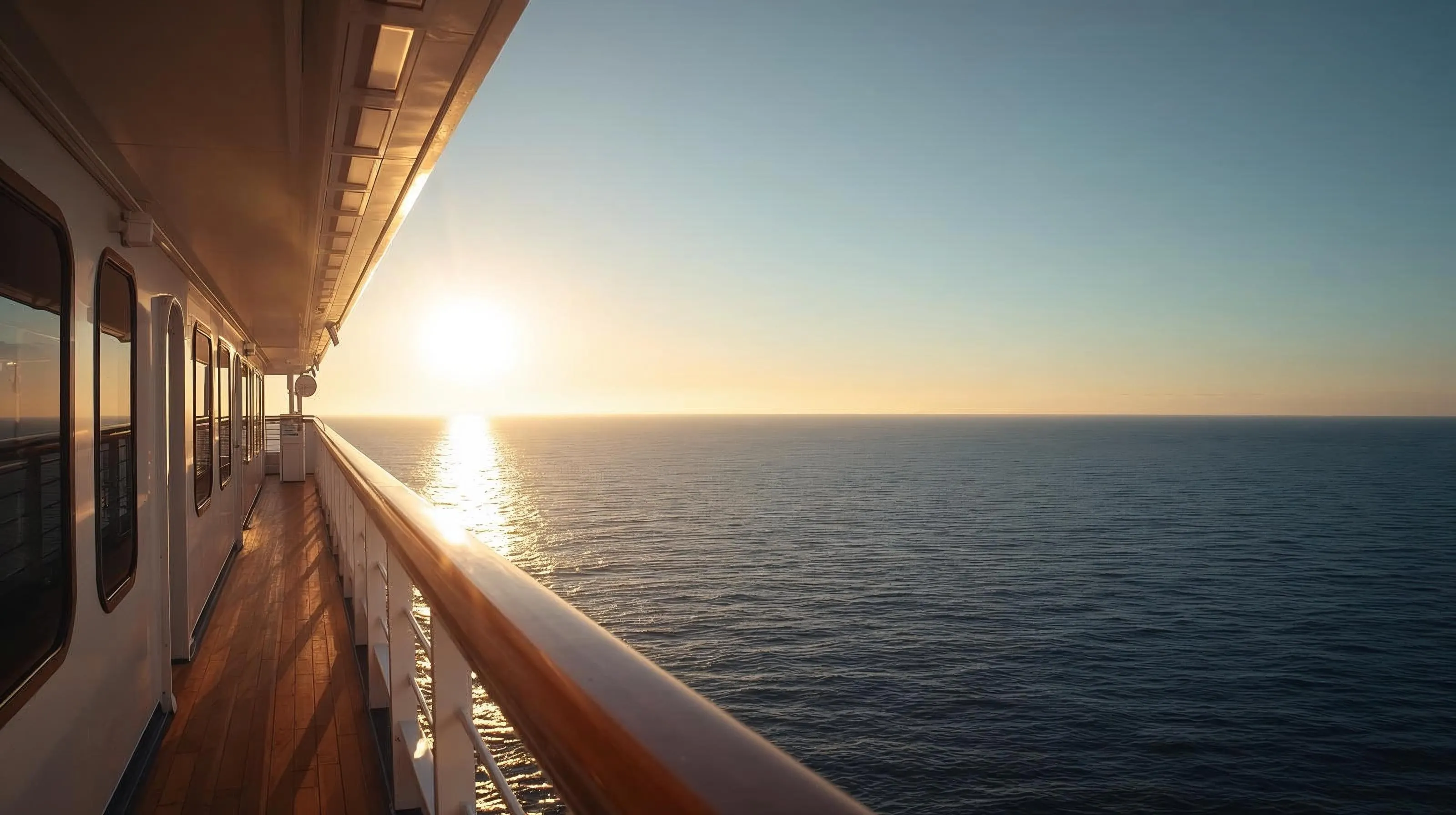
The Night Before Our First Cruise
It was 2012 when we booked our very first cruise, a seven-day sailing aboard Royal Caribbean’s Oasis of the Seas, one of the largest cruise ships in the world at the time.
Everyone told us it would be “the best vacation of your life.”
And yet…
the night before boarding, I felt something completely different.
A knot in my stomach.
A little excitement.
A lot of fear.
I wondered:
- What if the ship feels too big?
- What if the ocean feels overwhelming?
- What if seasickness ruins everything?
- What if we feel stuck with no escape?
These weren’t dramatic thoughts. They were honest ones, and if you’re reading this as a first-time cruiser, you might feel some of them too.
The truth is:
the first cruise you ever take is more emotional than anyone prepares you for.
The first cruise you ever take is more emotional than anyone prepares you for.
There’s anticipation, hope, curiosity… and a quiet fear of the unknown.
And all of that is normal.
Choosing the Right People to Travel With: A Lesson First-Time Cruisers Forget
One of the most overlooked parts of cruising has nothing to do with the ship. It has everything to do with the people you bring with you.
Most first-time cruisers imagine a big “group vacation” like multiple families, couples, kids, friends, distant relatives.
It sounds fun.
But in reality?
A cruise amplifies differences in timing, personalities, routines, and interests.
Some people like to sleep in.
Some want breakfast at 7 AM.
Some want to sit by the pool all day.
Some want to do every trivia game, every show, every excursion.
Now picture that with three families.
Or four couples.
Or a huge reunion group.
Conflicts are not loud.
They are subtle.
- “Why didn’t you wait for us?”
- “We didn’t want to eat that early.”
- “We already booked something different.”
- “We don’t want to spend money on that excursion.”
This is where many first-time cruisers feel stress they never expected.
Cruising is best enjoyed either as your own family unit, or with one other family/friends who share your wavelength.
Not the same interests, just the same understanding of vacation pace.
We’ve learned this over our years of cruising:
The fewer the people, the better the experience.
The closer the wavelengths, the smoother the journey.
And the best part?
Even if you cruise just as your own household, you’ll still meet wonderful people onboard anyway.
Cruising is incredibly social, but only if you want it to be.
Stepping Onto the Ship: The Moment Everything Shifted
You never forget your first steps on a cruise ship.
I still remember walking through the terminal, handing off our luggage, scanning our boarding passes, and then crossing the gangway onto the Oasis of the Seas.
The doors opened…
and instantly, everything I feared vanished.
We weren’t greeted by narrow hallways or dark interiors.
We stepped directly into the Royal Promenade, bright, open, energetic, alive.
Shops. Cafés. A rising bar that moved between decks.
Live music echoing off glass and steel.
It didn’t feel like a ship.
It felt like a city that happened to float.
But the real turning point came when we discovered Central Park, an open-air neighborhood with real plants, real trees, quiet benches, and elegant restaurants. The sunlight poured through, the pathways were calm, and the atmosphere felt more like a boutique hotel than anything nautical.
This wasn’t the “being stuck on a ship” I had imagined. It was freedom, delivered in a form I didn’t know existed.
What First-Time Cruisers Don’t Know But Eventually Learn
Here’s the part you only understand once you step onboard:
1. Cruise ships are enormous and intentionally designed to never feel claustrophobic.
There are quiet places, lively places, structured activities, and hidden corners where you’ll forget you’re even at sea.
2. Motion is usually far less than people expect.
With stabilizers and modern engineering, most sailings feel smooth, almost unrealistically so.
3. You choose your rhythm.
Do everything or do nothing.
Sleep in or wake early.
Book activities or just go with the flow.
It’s your vacation, your pace.
4. You wake up each day in a new destination.
Without flights.
Without repacking.
Without logistics.
Just open the curtains and the world has changed.
5. Safety is deeply embedded into cruise culture.
There are protocols, staff, and technology behind the scenes ensuring that every moment feels effortless.
Cruising removes the stress of planning and replaces it with the ease of simply being.
What Happened After Day 2
Somewhere on Day 2, maybe during a sunrise on the balcony, maybe during a quiet moment watching the water, something inside us relaxed.
The anxiety dissolved.
The worries faded.
The ocean no longer felt intimidating; it felt peaceful.
By Day 3 we realized:
we weren’t just enjoying ourselves, we were healing from everyday life.
We weren’t just enjoying ourselves — we were healing from everyday life.
No emails.
No commuting.
No rushing.
Just a feeling of being cared for, carried, and gently reset.
That’s when we understood why people cruise again and again.
How One Cruise Turned into a Lifestyle
Oasis of the Seas was our beginning.
Since then:
- We explored different cruise lines
- Discovered the elegance and serenity of Princess Cruises
- Sailed to Alaska, Mexico, Panama Canal, the Caribbean, and beyond
- Found our rhythm, our preferences, our loyalty, and
- Learned that each cruise teaches you something new about yourself
But everything, every ocean sunrise, every port adventure, every quiet moment on the deck, traces back to that nervous yet hopeful step in 2012.
First-cruise fear is normal and almost universally unfounded. The ship is larger than you imagine, the motion is less than you expect, and the reset you feel by Day 2 or 3 is unlike anything a resort or city trip delivers. Start with a 5–7 night Caribbean or Alaska sailing and go with your immediate family or one trusted couple. Keep the group small and the pace your own.
Eat · Train · Lead Takeaways
A lifestyle philosophy inspired by real journeys, including this one.
EAT: Nourish Your Mind & Body
- Cruising reminds you to slow down and savor life again.
- You experience food, rest, and time without rushing.
- Balance returns without forcing it.
TRAIN: Strengthen Your Comfort with the Unknown
- Booking your first cruise is training your mind to embrace new experiences.
- Facing fear and realizing reality is kinder than imagination builds inner resilience.
- You learn to trust motion, change, and flow.
LEAD: Step Forward with Courage and Curiosity
- You lead your life differently when you choose growth over hesitation.
- Cruising gives you space to think, reset, and return home with clarity.
- It becomes a reminder that leadership starts with taking the first step, even a nervous one.
Continue Your Cruise Journey
Ready for the next chapter?
In Part 2, I will show you how to pick the perfect cruise based on your personality, your comfort level, your travel style, and the kind of memories you want to create. I’ll share the mistakes we made, the lessons we learned, and why Princess Cruises eventually became our home at sea.
Click here for PART 2 — How to Choose Your First Cruise →
Or jump back to the series hub: Cruising for Beginners
About the Author
Raj Chanolian is a Platform Engineering leader and the creator of Eat · Train · Lead, a lifestyle framework rooted in intentional living. A loyal cruiser since 2012, Raj also writes about travel, growth, discipline, and designing a life that feels both energized and meaningful.
What I'd Actually Do
- Book a 5–7 night itinerary for your first cruise. Long enough to fully relax into it, short enough that the commitment doesn't feel overwhelming.
- Choose a large modern ship (Royal Caribbean, Princess, Celebrity) for a first sailing. The stability, variety of spaces, and onboard options make the learning curve much easier.
- Keep the travel group small — your immediate family or one other couple who shares your pace. Group dynamics amplify friction on a ship in ways they don't on land.
- Book a balcony cabin if the budget allows. The private outdoor space eliminates any sense of being confined, especially important for first-timers with space anxiety.
- Let yourself unplug for at least the first 48 hours. The reset you feel on Day 2 is one of the most underrated experiences in modern travel — you can't access it while checking email.