Depression doesn't always announce itself loudly. Sometimes it shows up as heaviness. Fog. A slow dulling of joy. A quiet dependence on "something" just to feel normal.
What surprised me wasn't that relief could come from a plant.
It was which plant.
Saffron.
Yes! the same precious spice we associate with festivals, biryani, and golden milk. Long dismissed as culinary luxury, saffron has quietly earned a place in modern nutritional science for its mood-supporting, antidepressant-like properties, without the blunt force of pharmaceuticals.
This is not hype.
It's history, biology, and experience converging.
Let's unpack it, slowly, honestly, and responsibly.
The Unexpected Shift
I didn't come to saffron searching for an antidepressant.
I came to it through sleep trouble and mental fatigue, that wired-but-tired feeling many high performers know too well.
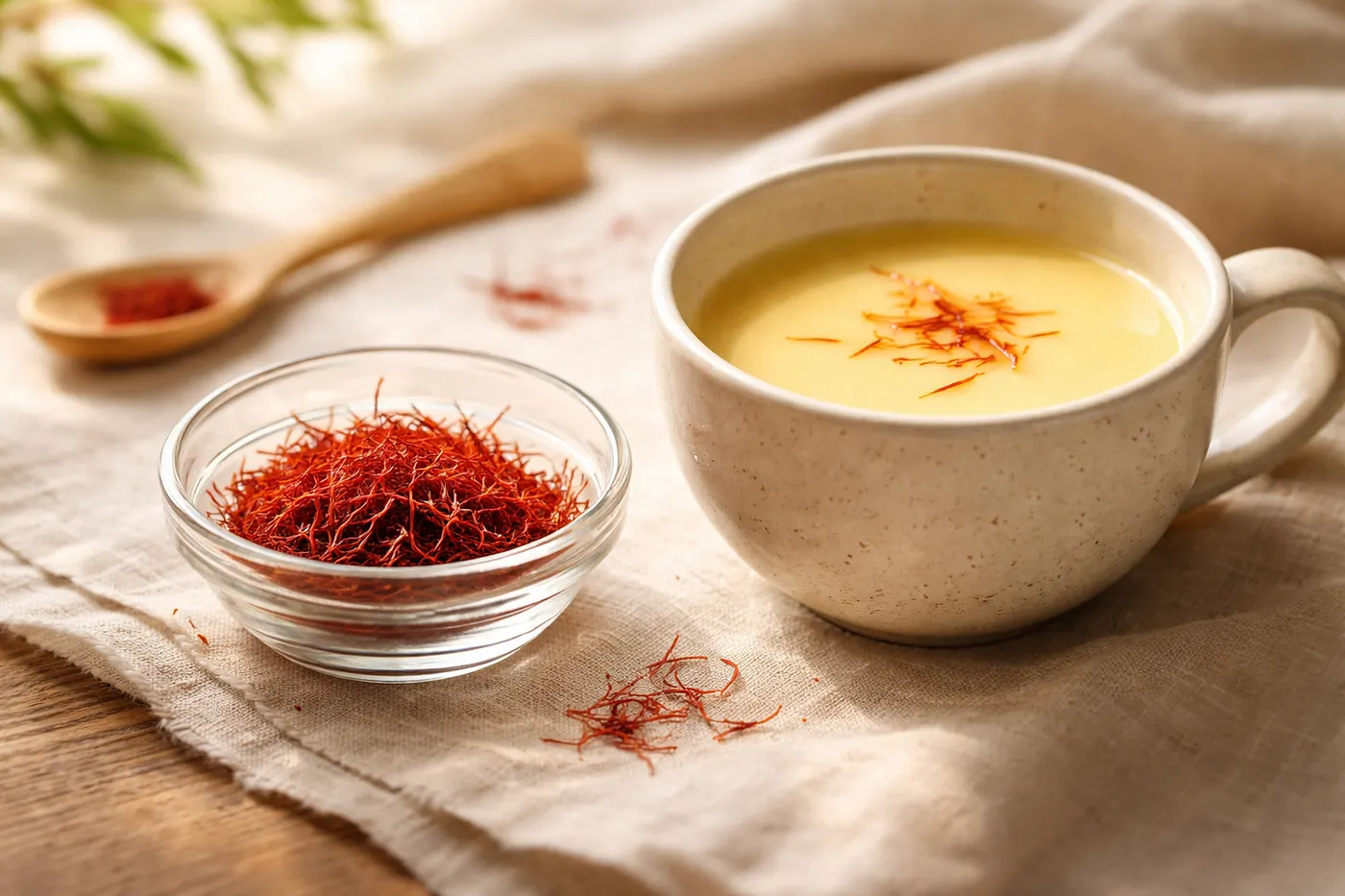
One night, almost casually, I steeped 2 strands of saffron in warm milk.
Not a ritual. Not an experiment. Just curiosity.
Nothing dramatic happened that night.
But over the next 7–10 days, something subtle shifted:
- Morning heaviness eased
- My reactions softened
- Sleep felt deeper
- The background noise in my head… lowered
No fireworks.
Just space.
That's when I realized:
This isn't a stimulant. It's a regulator.
What Is Saffron, Really?
Saffron comes from the dried stigmas of the Crocus sativus flower.
Each flower produces just three crimson threads, all hand-harvested.
That's why saffron is precious.
But its real value isn't the price, it's the chemistry.
Key Active Compounds
- Crocin & Crocetin — mood elevation, neuroprotection
- Safranal — calming, anti-anxiety effects
- Kaempferol — anti-inflammatory, antioxidant
These compounds interact with serotonin, dopamine, and oxidative stress pathways — the same systems targeted by many antidepressants.
How Saffron Supports Depression (Naturally)
Here's the part that made me pause the first time I learned this:
Multiple clinical trials show saffron performing on par with common antidepressants for mild to moderate depression, with far fewer side effects.
What It Does (in plain English)
- Lifts mood gently — supports serotonin balance
- Calms the nervous system — reduces anxiety signals
- Improves sleep quality — without sedation
- Reduces inflammation — often linked to depression
- Protects brain cells — antioxidant effect
No emotional flattening.
No numbness.
No dependency spiral.
Just… light returning gradually.
What Science Suggests (Without the Jargon)
Studies indicate saffron may:
- Inhibit serotonin reuptake (like SSRIs, but gentler)
- Reduce cortisol-driven stress chemistry
- Improve emotional resilience over time
This is why saffron has been used for centuries in Ayurveda, Persian medicine, and Siddha traditions, long before modern labels existed.
How to Take Saffron (Correctly)
Dosage (This Matters)
• 15 — 30 mg per day total
(That's roughly 2 — 4 strands, not a pinch)
More is not better.
Best Ways to Take It
- Saffron Milk (night) — calming, sleep-supportive
- Saffron Tea (morning or evening) — mood clarity
- Soaked Strands (10 — 15 min in warm water/milk)
Pro tip: Always soak saffron. Dry threads don't release benefits well.
Frequency
- Daily for 6 — 8 weeks
- Take a 1 — 2 week break after a cycle
This isn't a forever crutch. It's a support phase.
Who Can Benefit Most
- People with mild to moderate depression
- Those experiencing stress-related mood dips
- Individuals wanting to reduce reliance on stimulants or sedatives
- High-stress professionals, creatives, caregivers
Who Should Be Careful or Avoid
- Pregnant women (high doses may stimulate uterine activity)
- People with bipolar disorder (mood elevation may not be appropriate)
- Those on antidepressants without medical guidance
- Anyone allergic to crocus species
And a crucial note:
Never stop prescribed antidepressants abruptly.
Saffron can be supportive, not a reckless replacement.
Side Effects (Rare, But Worth Knowing)
At proper doses:
- Mild headache (rare)
- Slight nausea if taken on empty stomach
- Overuse may cause dizziness or agitation
Again, dose discipline is everything.
The Bigger Realization
Saffron taught me something important:
Healing doesn't always come from force.
Sometimes it comes from signal correction.
Depression isn't always a chemical deficiency.
Often, it's a nervous system stuck in survival mode.
Saffron doesn't overpower that system.
It reminds it how to soften.
Where to Buy Saffron (Without Getting Cheated)
Saffron is one of the most adulterated spices in the world.
If you're using it for mood and mental health, quality matters deeply.
What to Look For
- Deep crimson red threads (not yellow, not mixed colors)
- Strong honey-like, slightly metallic aroma
- Dry and brittle texture
- Clearly labeled origin
- Sold as threads (not powder)
Avoid powdered saffron. It's often diluted with turmeric or artificial color.
Best Origins (Traditionally Respected)
- Iranian saffron — Most studied and widely available
- Kashmiri saffron — Deep color, intense aroma
- Spanish saffron — Slightly milder but high quality
If possible, look for:
- ISO-certified saffron
- Lab-tested purity
- Organic labeling (though not mandatory)
Where to Buy
Trusted Sources:
- Specialty spice shops
- Indian, Persian, or Middle Eastern grocery stores
- Reputable online brands with lab certification
- Health-focused marketplaces with transparent sourcing
Expect to pay $10–$20 for 1 gram of genuine saffron.
If it's extremely cheap, it's probably not real.
Remember:
You only need 2–4 strands per day. One gram lasts weeks.
Two Simple Recipes for Mood Support
These are practical, repeatable, and effective.
1. Night Calm Saffron Milk (Sleep + Emotional Balance)
Best for: Evening wind-down, anxiety reduction, gentle mood support
Ingredients
- 1 cup warm whole milk (or almond milk)
- 2–3 saffron strands
- Pinch of cardamom (optional)
- ½ tsp raw honey (optional)
Method
- Soak saffron in 1 tbsp warm milk for 10 minutes.
- Heat remaining milk gently (do not boil aggressively).
- Add soaked saffron mixture.
- Stir and sip slowly before bed.
Why It Works
- Warm milk supports tryptophan pathways
- Saffron regulates serotonin gently
- Evening timing reduces cortisol carryover
Drink consistently for 6–8 weeks.
2. Morning Clarity Saffron Tea (Mood + Focus)
Best for: Low-mood mornings, brain fog, emotional heaviness
Ingredients
- 1 cup hot water
- 2 saffron strands
- Small slice of fresh ginger (optional)
- Few drops lemon (optional)
Method
- Soak saffron in hot water for 10–15 minutes.
- Add ginger if desired.
- Sip slowly before coffee.
Why It Works
- Supports dopamine + serotonin balance
- Anti-inflammatory effect
- Ginger improves absorption
Pro tip:
Avoid combining with heavy caffeine immediately. Let saffron work first.
Micro Ritual for Emotional Reset
Try this for 7 days:
Morning:
- Saffron tea
- 5 minutes sunlight
- 3 deep nasal breaths
Night:
- Saffron milk
- No screens 30 minutes prior
- Write one sentence of gratitude
Mood isn't just chemistry.
It's rhythm.
Final Thought
If you're feeling low, foggy, or quietly overwhelmed, and you're searching for something natural, respectful, and time-tested, Saffron might not fix everything.
But it might create just enough light to take the next step without fear.
Sometimes, that's all healing needs.
Disclaimer
This article is for educational purposes only and does not replace professional medical advice. If you are currently on medication or experiencing severe depression, consult a qualified healthcare provider before making changes.
About the Author
I write about nutrition, mental resilience, and performance through the lens of practical science and lived experience. My focus is simple: help people build emotional steadiness, metabolic strength, and sustainable habits, naturally and intentionally.
Creator of the Eat · Train · Lead philosophy, I believe true wellness begins with small, disciplined daily choices.
The clinical evidence for saffron in mild-to-moderate depression is surprisingly solid — multiple trials, real effect sizes, fewer side effects than SSRIs in those populations. That said, the research is primarily in mild-to-moderate cases and the supplement market is riddled with adulteration, so quality sourcing matters as much as the decision to try it. This is a genuinely useful tool for mood support, not a replacement for professional care if you're struggling seriously.