The Unexpected Teacher 🐾
The day we drove four hours to meet her, I wasn’t sure who was rescuing whom.
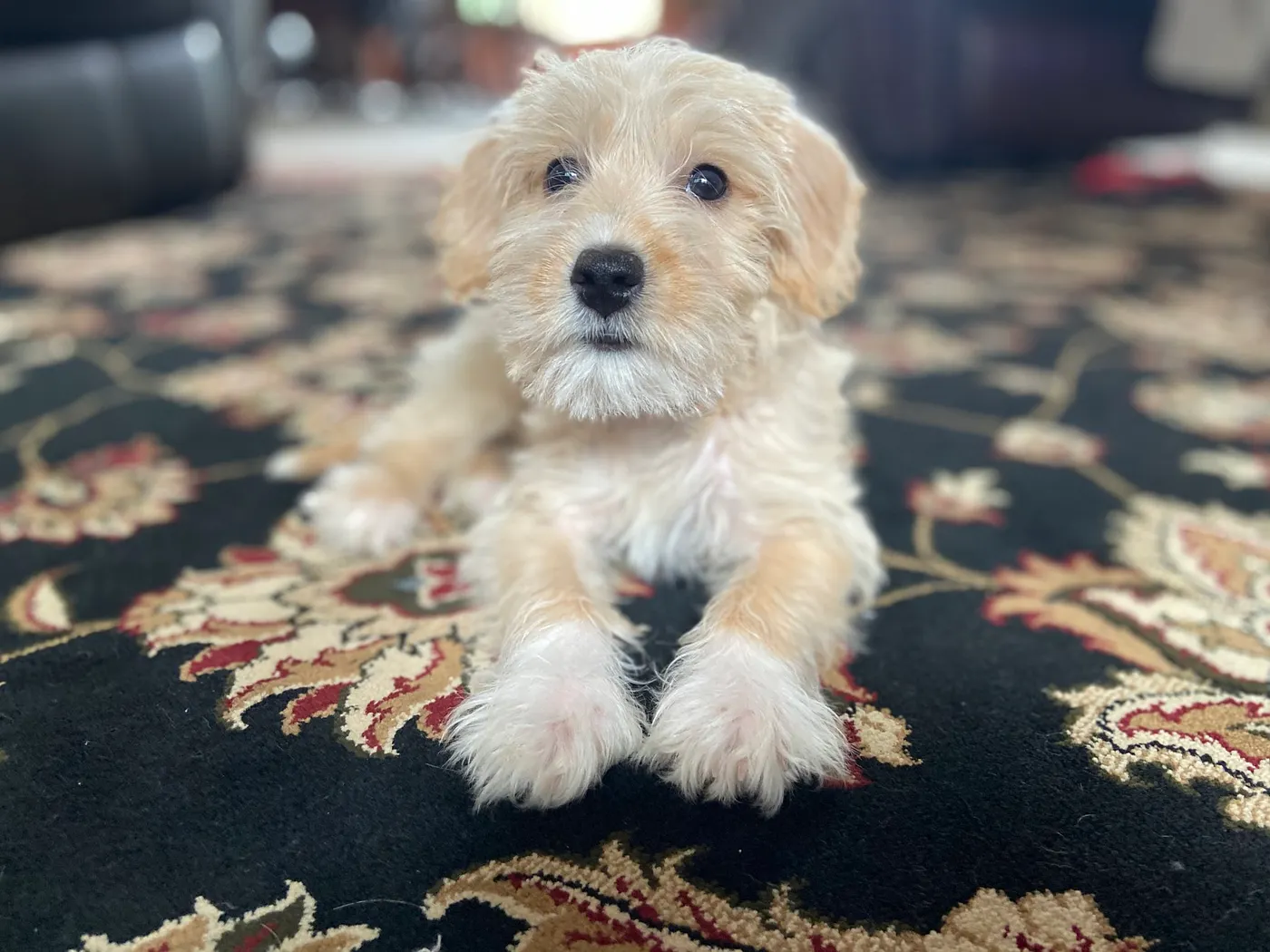
A tiny Schnoodle with curious eyes and a cautious heart stepped into our lives in 2020. She was shy, quiet, and observant. We named her Hira! For the first few days, she wouldn’t eat unless we stepped away. She watched every move, learning our patterns long before we learned hers.
I thought I was teaching her obedience to sit, stay, come.
But slowly, she began teaching me something deeper. How to lead without authority, how to listen without words, and how trust is never granted but only earned through consistency.
“Hira didn’t need commands. She needed presence.”
And that changed the way I led not just her, but my teams, my projects, and myself.
Presence Over Control
On my busiest days, I’d catch her quietly watching me from across the room, head tilted, tail still, eyes calm.
She could sense when my mind was spinning with sprint reviews and production issues. I’d bring that tension home like an invisible backpack.
And she’d respond the way no dashboard could by simply placing her paw on my chest.
That moment of pause was more powerful than any productivity hack.
She wasn’t asking for attention. She was reminding me to be present.
In leadership, I realized I’d done the same, racing through meetings, checking boxes, half-listening.
Hira taught me what true focus feels like. When she plays, she plays. When she rests, she rests. There’s no multitasking in her world.
Teams, like dogs, can sense when your attention is divided, and they disengage quietly.
Now, I start each one-on-one or review meeting the way I greet Hira when I walk through the door, phone away, attention full, energy calm.
Trust Takes Time
The first week she came home, Hira wouldn’t climb onto the couch.
I tried treats, toys, even soft coaxing. Nothing worked. She’d sit on the floor, close enough to watch me, but far enough to feel safe.
So, I stopped trying. I simply sat on the floor beside her each evening, reading or working quietly. On the seventh day, she climbed into my lap. No treat, no command, just quiet trust finally landing.
That’s leadership.
You can’t rush trust. Not with people, not with animals. You earn it through reliability, not rhetoric.
Trust isn’t built in milestones. It’s built in moments.
Now, when a new team member joins, I don’t flood them with onboarding tasks or expectations. I sit beside them, metaphorically until they choose to climb up.
Energy Leadership
Hira mirrors energy better than any human I know.
If I walk in frustrated after a long incident review, she retreats.
If I’m calm and centered, she approaches gently.
If I’m joyful, she explodes with excitement like her heart is on fire.
She’s a living feedback loop showing me that energy is contagious.
And the same holds true in teams.
There was a time when a production outage hit just before midnight. I was exhausted, irritated, and it showed in every message I sent.
My tone spread faster than the root cause.
The next day, one of my engineers said, “We fixed the issue, but we all felt on edge because you sounded different.”
That conversation hit hard.
Just like Hira reads my tone, my team reads my mood.
Since then, I’ve learned to stabilize my “leadership energy” before entering any room, virtual or real.
I take a breath, reset, and walk in with calm focus.
Because if I’m not steady, no one else will be.
Patience and Boundaries
Training Hira wasn’t easy. She’s intelligent, but also independent. She questions every command with that look that says, are you sure you mean it?
I remember teaching her “stay.” She’d sit perfectly still, then inch forward millimeter by millimeter, testing limits.
I used to get frustrated, until I realized she wasn’t being disobedient, she was learning where safety ends and freedom begin!
Boundaries, when consistent, don’t limit, they reassure.
At work, I noticed the same pattern. When expectations were vague, people tested limits, not out of rebellion, but for clarity. When structure was firm but fair, trust deepened.
Today, I lead with structure, clear roles, clear space but within that space, people move freely, like Hira chasing light across the living room.
Loyalty Beyond Logic
There’s this moment every time I pull into the driveway, and even before I open the door, I see her silhouette in the window.
She waits motionless until she hears my keys.
Then it’s explosion.
The tail, the spin, the sprint, five seconds of unfiltered joy.
It doesn’t matter how the day went, what failed, or what pressure I’m carrying, she meets me with the same joy, the same belief: You showed up. That’s enough.
That kind of unconditional loyalty resets your perspective. In leadership, loyalty isn’t earned by authority. It’s reciprocated by consistency.
Show up, even on the bad days. Celebrate small wins. Keep promises.
Love without words is loyalty in action.
Hira doesn’t keep score. She just keeps faith. And that’s a leadership lesson I remind myself of often, lead in a way that people want to greet you when you walk in the room.
Reflection: The Silent Mirror
Sometimes, late at night, I’ll find her asleep near my desk while I’m still working on architecture diagrams or writing notes for my team.
She doesn’t need my attention; she just needs my presence.
And that small act of quiet companionship feels like leadership distilled to its essence.
It’s not about grand gestures, inspirational speeches, or perfect strategies.
It’s about showing up, being steady, and making those around you feel safe enough to rest while you keep watch.
Hira taught me that leading is not about commanding motion. It’s about creating calm. And calm, when consistent, breeds confidence, in dogs, in teams, and in ourselves.
The Takeaway
Leadership, like love, doesn’t always speak.
Sometimes, it just sits beside you until you’re ready to move.
Hira reminded me that empathy isn’t soft, it’s strategic.
That trust is a slow build, not a checklist.
And that presence, patience, and quiet confidence can change more than any presentation ever will.
She may never understand the systems I build, but she’s the best mirror I have for the kind of leader I strive to be, one who listens, steadies, and cares without needing to be heard.
The leadership lessons in this article aren’t metaphors — they’re direct observations of behavioral feedback that most professionals don’t receive honestly from anyone in their working life. A dog mirrors your energy in real-time with no social agenda. Seven days of patient floor-sitting before trust lands is a more accurate model of how trust actually works in teams than any onboarding playbook. If these principles feel obvious, it’s worth asking honestly whether you’re actually practicing them — especially the one about divided attention in meetings.
Eat · Train · Lead Reflection
Eat: Notice what nourishes your relationships. It’s often silence, not words.
Train: Practice pausing before reacting. Patience builds emotional strength.
Lead: Listen before you speak. Presence is the highest form of leadership.
If this resonated, explore the other dimension of Eat · Train · Lead
About the Author
Raj Chanolian is a platform engineering leader, certified personal trainer, and passionate storyteller exploring how discipline, empathy, and mindfulness shape modern leadership. Through fitness, cooking, and everyday lessons from his Schnoodle Hira, he writes about building systems, human and digital that perform with purpose and heart.
What I'd Actually Do
- In your next one-on-one meeting, put the phone face down and close the laptop. Full presence for 30 minutes. Notice if the quality of what you learn changes — it will.
- With a new team member or a struggling relationship at work, try the "sit on the floor" approach: stop coaxing and start being consistent and present. Don't flood them with tasks on day one. Give them time to arrive.
- Before your next high-stakes meeting or difficult conversation, check your energy level and emotional state. If you're arriving frustrated or distracted, take 5 minutes to reset before walking in. Your team reads it before you say a word.
- Clarify the boundaries on your team — not to restrict, but to create safety. When expectations are vague, people probe them. When structure is fair and visible, people move freely within it.
- Write down one leadership principle this week that you believe in but haven't been practicing. Not because you forgot it — but because you got busy. That gap is usually where the work is.