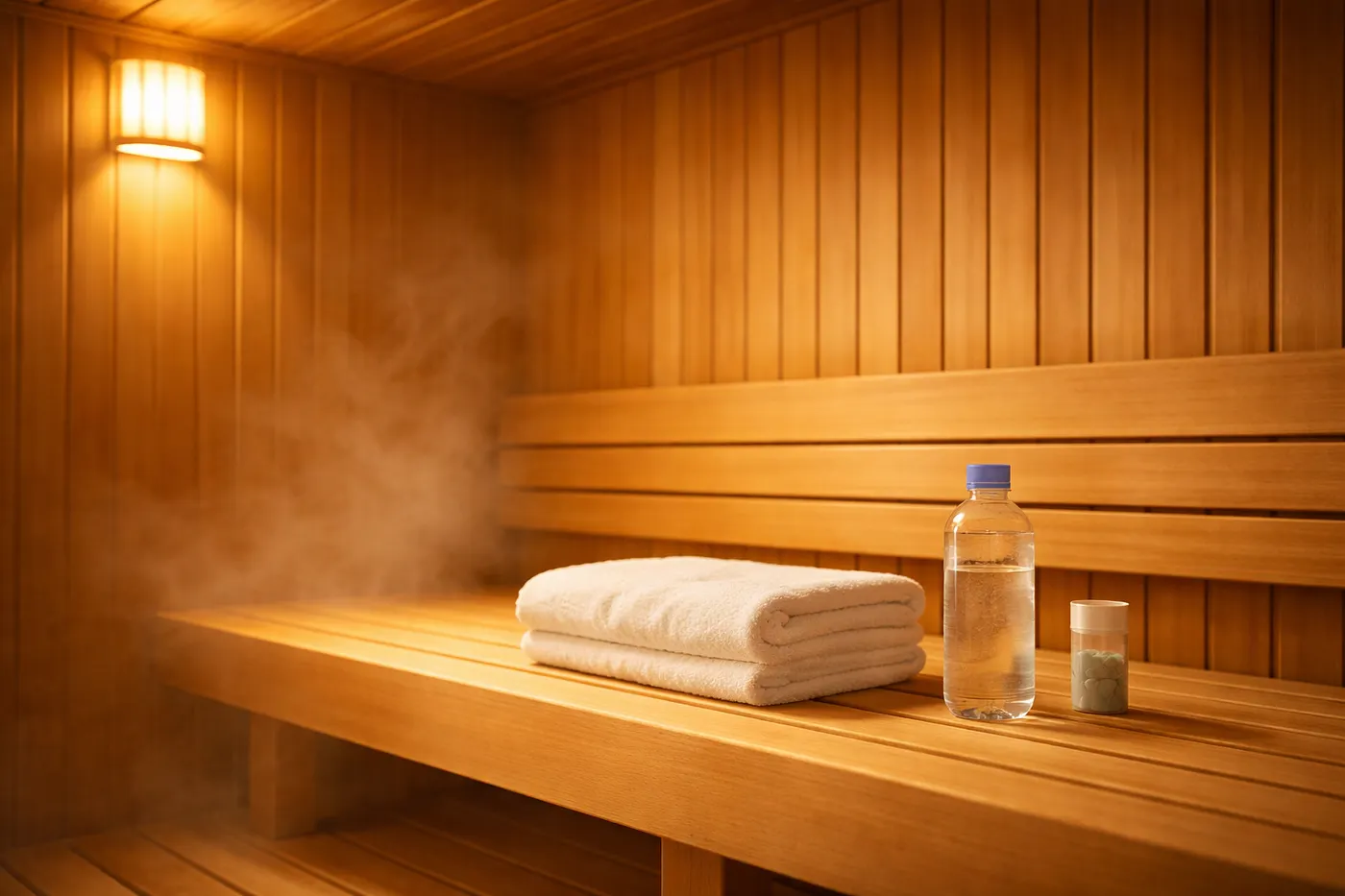
I once treated sauna like an afterthought, a luxury add-on when time allowed.
Then I noticed something strange:
- My best ideas came after sauna
- My sleep deepened
- My stress reactions softened
Not because sauna fixed my life,
but because it gave my body permission to recover.
And recovery, it turns out, is where growth actually happens.
The Forgotten Ritual of Heat
Long before wearables, biohacking podcasts, or longevity labs, humans used heat as medicine.
Not for punishment. Not for weight loss.
But for repair, resilience, and clarity.
The sauna wasn't designed to burn calories.
It was designed to restore balance, physically, mentally, and emotionally.
Today, science is finally catching up to what ancient cultures already knew.
What a Sauna Actually Does to Your Body
When you step into a sauna, your body believes it has entered a controlled survival scenario.
That's a good thing.
Here's what happens beneath the sweat:
1. Heat Stress → Adaptation
Sauna exposure creates hormetic stress; a small, intentional stressor that trains your body to adapt and grow stronger.
Your heart rate rises (similar to moderate cardio).
Blood vessels dilate.
Circulation improves.
You're not just sweating. You're training your cardiovascular system without impact.
2. Heat Shock Proteins: The Cellular Repair Crew
Sauna heat activates heat shock proteins (HSPs).
Think of them as:
- Cellular mechanics
- Protein repair agents
- Anti-aging custodians
They help:
- Repair damaged proteins
- Improve cellular resilience
- Protect against neurodegenerative disease
This is one reason sauna use is linked to brain health and longevity.
3. Nervous System Downshift
Despite the heat, regular sauna use trains your nervous system to calm down faster.
After the session:
- Parasympathetic (rest-and-digest) activity increases
- Stress hormones decline
- Mental noise quiets
This is why many people report:
- Deeper sleep
- Reduced anxiety
- Improved emotional regulation
The Metabolic Angle No One Talks About
Sauna doesn't replace exercise, but it supports metabolism in a unique way.
Benefits include:
- Improved insulin sensitivity
- Better glucose uptake by muscles
- Reduced visceral fat over time (especially when paired with movement)
Heat improves blood flow to muscle tissue, making your body better at handling sugar and nutrients.
Think of sauna as metabolic housekeeping, not fat-burning magic.
Skin, Detox, and the Truth About Sweat
Yes, you sweat toxins.
But not in the dramatic "detox cleanse" way social media promises.
What actually happens:
- Sweat removes small amounts of heavy metals
- Pores clear, skin circulation improves
- Lymphatic flow increases indirectly through heat and circulation
The real detox powerhouse remains your liver and kidneys.
Sauna simply supports the process, it doesn't replace it.
Mental Clarity: Why Ideas Appear in the Heat
Many people report:
- Creative breakthroughs
- Emotional release
- Unexpected clarity
Why?
Because sauna removes distractions:
- No phone
- No noise
- No urgency
Your mind finally gets still enough to hear itself.
This is why sauna has long been paired with reflection, prayer, or silence across cultures.
How Long Should You Stay in a Sauna?
The sweet spot (for most people):
- 15–20 minutes per session
- Temperature:
Traditional sauna: ~170–190°F (75–90°C)
Infrared sauna: ~120–140°F (50–60°C)
More is not better.
The goal is adaptive stress, not exhaustion.
How Often Is Most Beneficial?
Based on population studies and practical outcomes:
- 2–4 sessions per week → noticeable benefits
- 4–7 sessions per week → longevity-level benefits (for adapted users)
Consistency beats intensity.
Who Should Use Sauna?
Ideal for:
- High-stress professionals
- Sedentary workers
- Athletes (recovery-focused)
- People with poor sleep
- Those seeking mental clarity and calm
Who Should Not Use Sauna (or Should Be Cautious)
Avoid or consult a professional if you have:
- Uncontrolled high blood pressure
- Heart rhythm disorders
- Severe dehydration
- Acute infections or fever
- Pregnancy (unless cleared by a physician)
Sauna is powerful, and power requires respect.
Common Mistakes That Reduce Benefits
- Staying too long
Leads to cortisol spikes instead of relaxation - Poor hydration
Dehydration cancels benefits and stresses kidneys - Using sauna as punishment
Sauna works best as recovery, not penance - No cool-down
A brief cool shower or air exposure enhances circulation rebound
Sauna + Lifestyle: What Works Best Together
Sauna amplifies benefits when paired with:
- Strength training
- Walking or Zone 2 cardio
- Breath-work
- Adequate protein and minerals
- High-quality sleep
Heat opens the door.
Your habits decide what walks through it.
The Real Takeaway
Sauna is not about sweating harder.
It's about recovering smarter.
In a world obsessed with doing more, Sauna teaches the discipline of doing less — better.
Sit.
Breathe.
Sweat.
Reset.
Quick Reference Guide
Session Length: 15–20 minutes (21 minutes ideal)
Frequency: 2–4x/week (up to daily if adapted)
Best Time: Post-workout or evening
Hydration: Water + electrolytes
Mindset: Recovery, not punishment
The ETL Sauna Loop
Eat → Train → Sauna → Sleep → Lead Better
- Eat to fuel training
- Train to create stimulus
- Sauna to accelerate recovery
- Sleep to lock in adaptation
- Lead with clarity the next day
This loop compounds.
Disclaimer
This article is for educational purposes only and does not replace medical advice. Always consult a qualified healthcare professional before starting any new wellness practice, especially if you have existing health conditions.
About the Author
Raj Chanolian writes at the intersection of health, performance, and leadership, exploring how simple physiological practices, like heat, movement, and stillness, create outsized results in modern life.
Sauna is one of the few recovery tools with real population-level data behind it, not just biohacker anecdote. The research on cardiovascular benefit and sleep improvement is solid. The catch: consistency and correct duration matter — 15 to 20 minutes a few times a week beats one punishing 45-minute session per month. Pair it with your training and treat it as part of the recovery protocol, not a bonus.